How Many Solar Panels Do You Need? Sizing and Payback Formula
- By The Eco Aesthetic Editorial Team
- Posted
- Topic: Energy Efficiency
The number of panels is your yearly kWh divided by the kWh one kilowatt of panels makes where you live, divided by the watts per panel. The average American home bought 10,791 kWh in 2022; in Kansas City, a PVWatts run gives 1,433 kWh per kW, so that needs about 7.5 kW, or 19 panels of 400 W. Payback needs your own quote, because no price here is a market price.
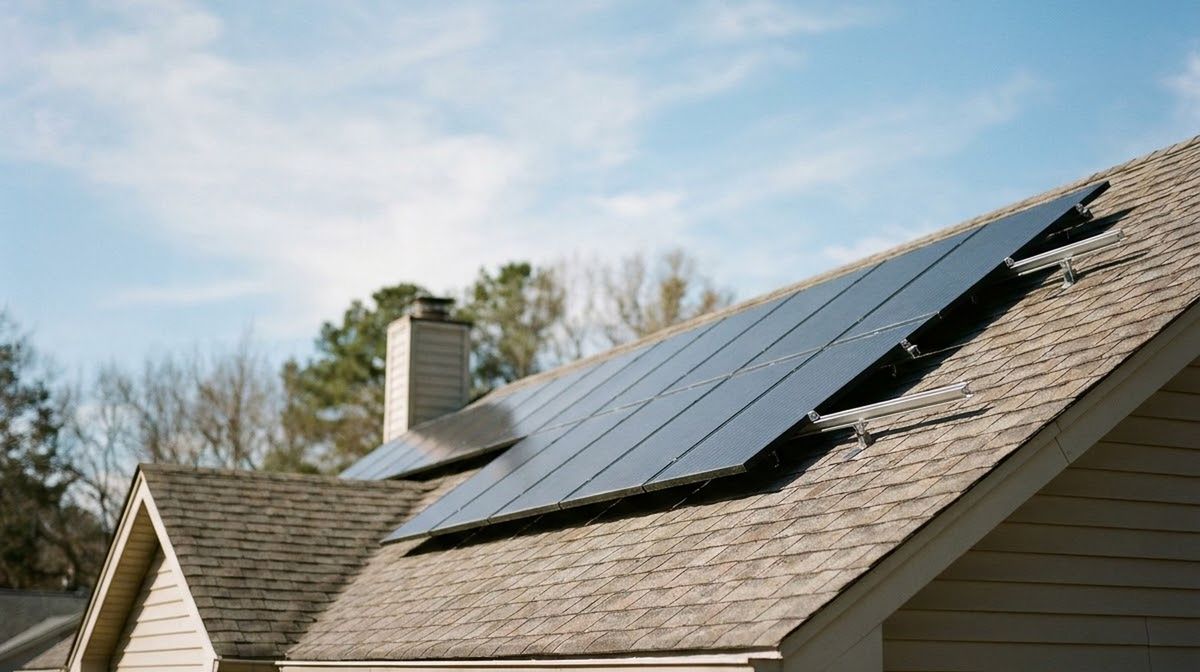
Part of our guide: Smart Home Technology for Sustainability: Devices That Save Energy and Money
The number of panels you need is your yearly electricity use, divided by the kilowatt-hours that one kilowatt of panels makes where you live, divided by the wattage of each panel, rounded up. The average American home bought 10,791 kWh in 2022, according to the Energy Information Administration. In Kansas City, a PVWatts run gives 1,433 kWh per kW per year, so covering that use takes about 7.5 kW: 19 panels of 400 W. This guide shows each step and the assumptions behind it, and the sizing and payback calculator runs it for your numbers. It is an estimate, not a quote or financial advice. Cutting use first with energy-saving smart home devices shrinks the system you need.
Your annual kWh
Start with the electricity you actually use. EIA reports that the average U.S. residential customer bought 10,791 kWh in 2022, about 899 kWh a month, with Louisiana at the high end (14,774 kWh) and Hawaii at the low end (6,178 kWh). Those are purchases from the utility; a home that already has solar buys less than it uses. Use your own bills instead of the average: twelve months, added up.
If you plan to add an electric car or a heat pump, add their expected use to the total, because the system will have to cover that too. Our smart home guide and the energy savings calculator cover trimming use first, since every kWh you do not use is a kWh you do not need panels for.
Peak sun hours by region
Peak sun hours are the daily solar energy on a panel, expressed as hours of full sun (1 kW per square metre): 5.03 for Kansas City, 6.54 for Phoenix and 3.95 for Seattle in the NREL runs below. Multiply by 365 and by a performance ratio (how much of that energy reaches your meter as AC power) to get yearly kWh per kW.
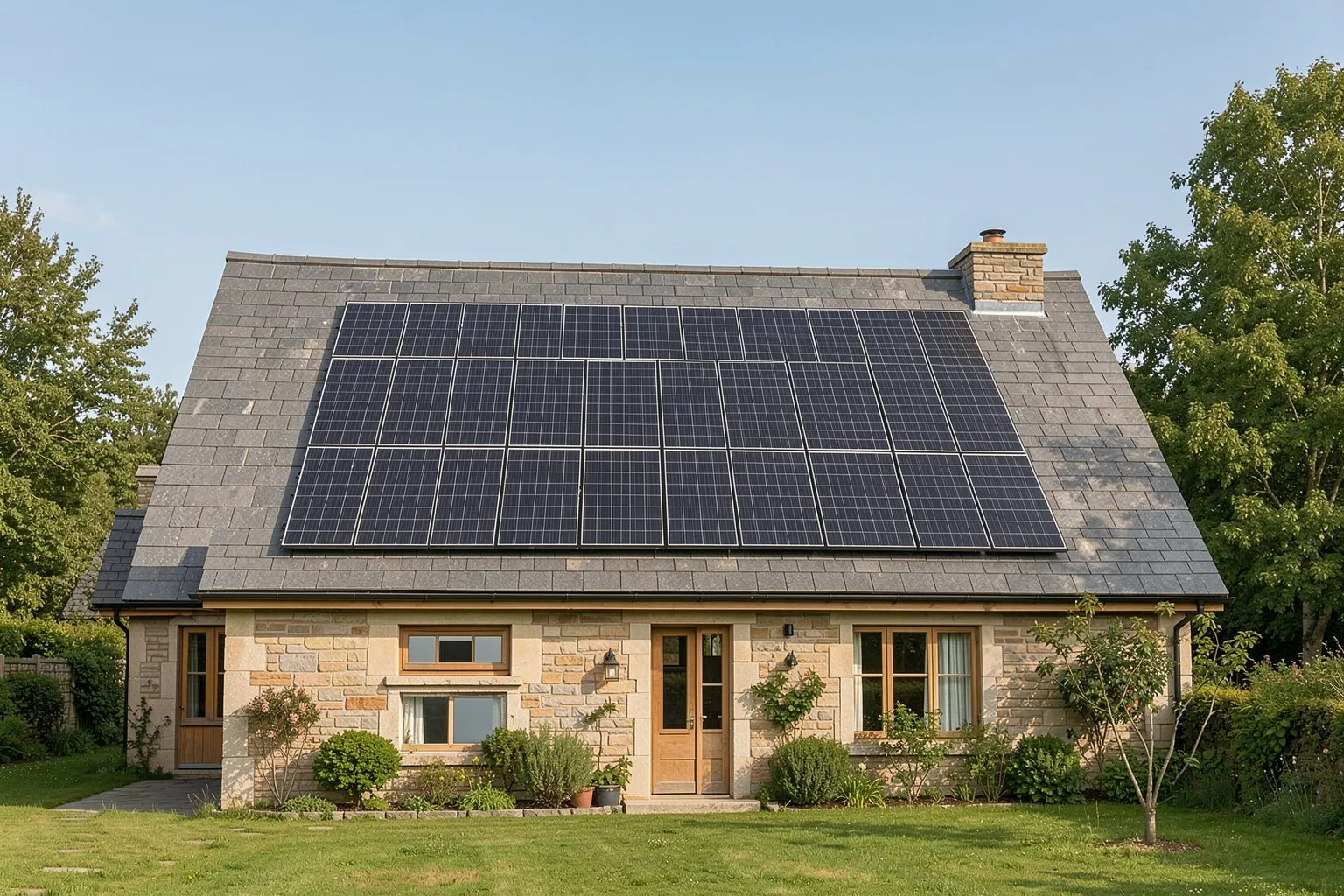
The table gives the PVWatts result directly, which is the number the sizing formula needs. NREL’s PVWatts v8 model, run on 2026-11-14 for a south-facing array tilted 20 degrees on an open rack with the default 14 percent losses, gives:
| Location | Peak sun hours (kWh/m²/day) | Yield (kWh per kW per year) | 400 W panels for 899 kWh a month |
|---|---|---|---|
| Atlanta, GA | 5.13 | 1,425 | 19 |
| Boston, MA | 4.66 | 1,311 | 21 |
| Chicago, IL | 4.47 | 1,309 | 21 |
| Dallas, TX | 5.45 | 1,506 | 18 |
| Denver, CO | 5.66 | 1,595 | 17 |
| Honolulu, HI | 5.78 | 1,623 | 17 |
| Kansas City, MO | 5.03 | 1,433 | 19 |
| Las Vegas, NV | 6.41 | 1,752 | 16 |
| Los Angeles, CA | 6.08 | 1,677 | 17 |
| Miami, FL | 5.58 | 1,554 | 18 |
| Minneapolis, MN | 4.61 | 1,333 | 21 |
| New York, NY | 4.46 | 1,292 | 21 |
| Phoenix, AZ | 6.54 | 1,755 | 16 |
| Sacramento, CA | 5.84 | 1,629 | 17 |
| Seattle, WA | 3.95 | 1,088 | 25 |
| Washington, DC | 4.86 | 1,394 | 20 |
These are one location each, so a town 200 miles away may differ. For your address, run PVWatts itself with your roof’s tilt and direction and enter its yearly result in the calculator as your own yield.
Panel wattage and system size
System size in kilowatts is the yearly kWh you want to cover divided by the yield. Panels are that size divided by the wattage of one panel, rounded up, because you cannot install part of one. A 400 W panel is our planning figure, not a sourced one, so use the rating on the datasheet in your quote. A higher-wattage panel means fewer panels for the same kilowatts, which matters when roof space is tight.
Losses and orientation
PVWatts’ default 14 percent system loss is a bundle of typical losses, not one number: soiling 2, shading 3, snow 0, mismatch 2, wiring 2, connections 0.5, light-induced degradation 1.5, nameplate rating 1, age 0 and availability 3 percent. If your roof is shaded, raise the figure; if it faces east or west, or is steeper or flatter than 20 degrees, the yield changes and a PVWatts run for your roof is the way to see by how much. The calculator rescales yield in proportion to your loss percentage, which is how PVWatts applies system losses to DC output.
Payback and incentives (dated)
Payback is the net cost divided by the money saved. Year-one savings are the kWh you use from your own panels times your retail rate, plus anything you earn on surplus. The EIA’s state average for residential electricity from January to August 2026 is 18.19 cents per kWh for the United States (preliminary), and ranges from about 12 cents in North Dakota to over 46 cents in Hawaii.
Incentives are the volatile part. The IRS says the 30 percent Residential Clean Energy Credit covered qualifying property installed from 2022 through December 31, 2025, and is not available for property placed in service after that date. State, utility and local programs may still exist; confirm them and subtract only confirmed amounts. NREL’s review of field data found median panel degradation of 0.5 percent a year, which lengthens payback slightly, and the calculator lets you set it, along with a yearly electricity price rise that defaults to zero.
Calculator
Enter your monthly kWh, nearest location, state rate and a quote in the solar panel calculator to get panels needed, system size, yearly output and payback. Every default is shown on the page and can be changed.
Worked example
An average home with 899 kWh a month uses 10,788 kWh a year. In Kansas City, one kilowatt makes 1,433 kWh a year, so the system needs 10,788 ÷ 1,433 = 7.53 kW. With 400 W panels that is 7.53 × 1,000 ÷ 400 = 18.8, rounded up to 19 panels (7.6 kW), producing about 10,888 kWh a year. At 18.19 cents per kWh, all of the 10,788 kWh used is worth 1,962 dollars a year. If a quote were $21,000 with no incentive, simple payback would be 10.7 years; with 0.5 percent a year degradation, cumulative savings pass the cost in year 11. The $21,000 is an example, not a price you should expect.
What the estimate omits
This sizing leaves out financing costs, maintenance, inverter replacement, roof repairs, batteries, changes in your own use and utility rules about exports. It also uses one location per region and assumes a south-facing 20 degree array. Treat the result as the figure to bring to installers, and compare it against their production estimates; a quote that promises much more than a PVWatts run for your roof deserves a question.
| Location | Peak sun hours (kWh/m2/day) | Yield (kWh per kW per year) | 400 W panels for 899 kWh a month |
|---|---|---|---|
| Atlanta, GA | 5.13 | 1,425 | 19 |
| Boston, MA | 4.66 | 1,311 | 21 |
| Chicago, IL | 4.47 | 1,309 | 21 |
| Dallas, TX | 5.45 | 1,506 | 18 |
| Denver, CO | 5.66 | 1,595 | 17 |
| Honolulu, HI | 5.78 | 1,623 | 17 |
| Kansas City, MO | 5.03 | 1,433 | 19 |
| Las Vegas, NV | 6.41 | 1,752 | 16 |
| Los Angeles, CA | 6.08 | 1,677 | 17 |
| Miami, FL | 5.58 | 1,554 | 18 |
| Minneapolis, MN | 4.61 | 1,333 | 21 |
| New York, NY | 4.46 | 1,292 | 21 |
| Phoenix, AZ | 6.54 | 1,755 | 16 |
| Sacramento, CA | 5.84 | 1,629 | 17 |
| Seattle, WA | 3.95 | 1,088 | 25 |
| Washington, DC | 4.86 | 1,394 | 20 |
A sunnier location needs fewer panels for the same use, but your roof direction, shade and actual kWh matter as much as the city, so run PVWatts for your address before you sign anything.
Frequently asked questions
How many solar panels do I need for 1,000 kWh a month?
It depends on where you live. A thousand kWh a month is 12,000 kWh a year. Using PVWatts yields for a south-facing array, that needs about 6.8 kW in Phoenix (18 panels of 400 W), 8.4 kW in Kansas City (21 panels) and 11.0 kW in Seattle (28 panels). Panel wattage changes the count, not the kilowatts.
Where do I find my yearly kWh?
Your electricity bill lists kWh used each month, and many utilities show twelve months of history in an online account. Add the months for a yearly total. If you will soon add an electric car, heat pump or induction range, add the extra kWh they will use, since sizing from last year's bill would undersize the system. A year of data matters because heating and cooling swing use by season.
What counts as a payback period for solar?
It is how long the savings take to equal what you paid after incentives. Divide the net cost by first-year savings for a simple figure, then allow for the output declining a little each year, which NREL's median puts at 0.5 percent. Payback ignores financing costs, maintenance and a possible inverter replacement, so it is a comparison number, not a profit forecast.
Can incentives change how many panels I need?
They change the cost, not the panel count. The IRS says the 30 percent federal Residential Clean Energy Credit is not available for property placed in service after December 31, 2025, so for a system installed now you should not assume it. State, utility and local programs vary, so enter only confirmed amounts and subtract them from the quote before working out payback.
How much does roof direction matter?
A lot, and PVWatts treats it as an input. The yields in this guide are for a south-facing array tilted 20 degrees. East or west roofs, steeper tilts and shade produce less, and PVWatts lets you enter your own tilt and azimuth. The default 14 percent loss already includes 3 percent for shading, so heavy shade on your roof needs a higher loss figure.
Does the calculator assume net metering?
No. It values each kWh you make at your retail rate only up to the kWh you use in a year, and values any surplus at the export rate you type in, which starts at zero. If your utility credits exports at retail, set the export rate equal to your rate. Net metering rules differ by state and utility, so check your own tariff before relying on a payback.
Sources
- How much electricity does an American home use? — U.S. EIA (eia.gov)
- PVWatts Calculator v8 API documentation — NREL (developer.nlr.gov)
- PVWatts Calculator (website, version 8.7.4) — NREL (pvwatts.nlr.gov)
- PVWatts help: System Losses — NREL (pvwatts.nlr.gov)
- Electric Power Monthly, Table 5.6.B: Average Price of Electricity by State — U.S. EIA (eia.gov)
- Residential Clean Energy Credit — IRS (irs.gov)
- Photovoltaic Degradation Rates: An Analytical Review (Jordan and Kurtz, NREL/JA-5200-51664) (docs.nlr.gov)
Related guides
- Smart Home Technology for Sustainability: Devices That Save Energy and Money
Discover smart home technology that cuts energy waste and utility bills—from ENERGY STAR smart thermostats to energy monitors, smart plugs, and automation.
- Sleek and Modern Energy-Efficient Appliances: How to Save Electricity Without Compromising Design
Compare sleek energy-efficient appliances—induction cooktops, heat pump dryers, inverter refrigerators, and dishwashers—using ENERGY STAR savings data.
- Energy-Efficient Lighting: LED Savings, Kelvin, and Design
Design beautiful energy-efficient lighting and calculate what LEDs save per year: lumens, warm Kelvin, 90+ CRI, the kWh times rate formula and a free tool.