
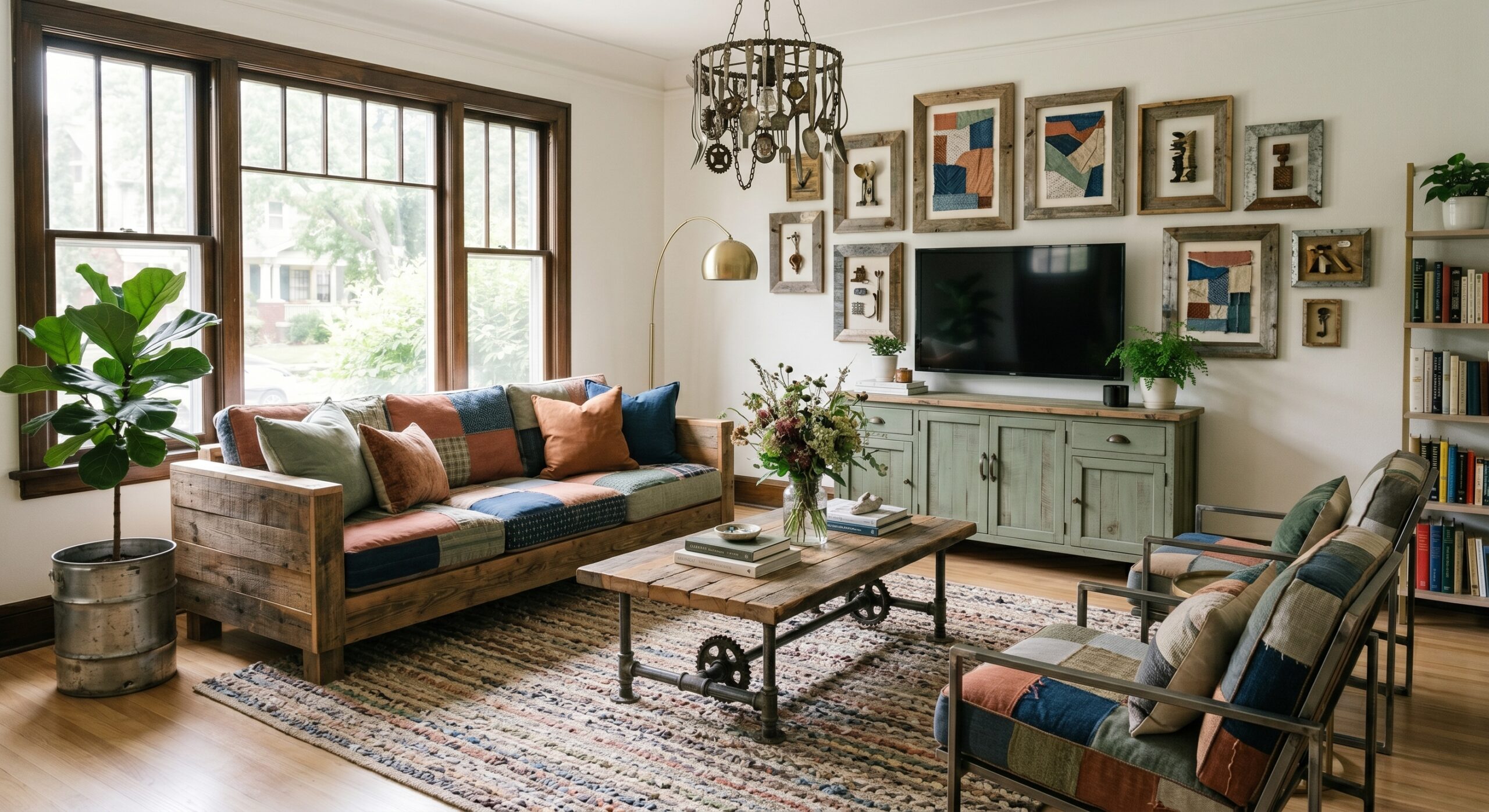
Recycled home decor turns discarded materials into stylish, functional pieces that reduce waste and enhance your living space.
In 2025, the global market for recycled materials in home decor reached $12.4 billion, supported by consumer demand for sustainable products that don’t sacrifice aesthetics (Statista). This guide explains how to incorporate eco-friendly interior design into your home using upcycled furniture and sustainable accessories, showing that green decorating doesn’t have to be expensive.
At a Glance
- What is recycled home decor? Furnishings and accessories made from reused, repurposed, or upcycled materials.
- Why choose it? Reduces landfill waste, lowers your carbon footprint, and adds unique character to your space.
- Best for: Renters, homeowners, and apartment dwellers who want stylish, affordable sustainability.
- Key materials: Reclaimed wood, glass, metal, fabric scraps, and plastic waste.
What Is Recycled Home Decor and Why Does It Matter?
Recycled home decor includes items and furniture made from materials that would otherwise go to landfills or be repurposed from existing products. Unlike budget-friendly green decorating, which may rely on new “eco-friendly” products, recycled decor focuses on upcycling—creatively reusing materials to create higher-value items.
According to the U.S. Environmental Protection Agency (EPA), Americans generated over 12 million tons of furniture and furnishings waste in 2023. Choosing sustainable home accessories made from recycled materials helps divert this waste and reduces demand for new resources.
The appeal of recycled decor comes from its authenticity and storytelling. A coffee table made from reclaimed barn wood or a pendant light from repurposed glass bottles doesn’t just look good—it tells a story of conservation and craftsmanship. For modern living spaces that value both design and ethics, recycled home decor offers a practical solution.
The eco aesthetic’s approach fits this movement by curating pieces that are as visually striking as they are environmentally responsible—because responsible design shouldn’t feel like a compromise.
How Recycled Decor Differs From Sustainable Decor
Eco-friendly interior design covers many practices, from organic fabrics to energy-efficient appliances. Recycled home decor is a specific approach focused on material reuse. Sustainable decor might include new items made from renewable resources, while recycled decor gives new life to what already exists.
For example:
- Sustainable decor: A dresser made from FSC-certified bamboo.
- Recycled decor: A dresser made from salvaged oak flooring or vintage doors.
Both are environmentally responsible, but recycled decor carries unique imperfections and history that mass-produced items cannot match.
The Environmental Impact of Choosing Recycled
Producing new furniture accounts for up to 10% of global carbon emissions (UNEP). By opting for upcycled furniture, you:
- Reduce waste: Keep materials out of landfills and incinerators.
- Lower emissions: Avoid the energy-intensive process of extracting and processing raw materials.
- Support circular economies: Encourage a system where waste becomes a resource.
In urban apartments, where space is limited and landfill access is restricted, recycled decor is especially effective. A single upcycled bookshelf can prevent dozens of pounds of wood and metal from being discarded without using new resources.
Top Recycled Materials for Home Decor (And How to Use Them)
Not all recycled materials are equally practical. Some are easier to work with, more durable, or better suited to specific design styles. Here’s what’s most popular and accessible:
1. Reclaimed Wood
What it is: Salvaged from old barns, factories, wine barrels, or shipping pallets.
Why it’s great: Extremely durable, rich in texture, and naturally aged for character. Ideal for statement furniture.
Design uses:
- Floating shelves with visible grain and nail holes.
- Dining tables with weathered patina.
- Headboards or accent walls with distressed finishes.
According to the Woodworking Network, reclaimed wood furniture can last over 100 years with proper care—far outlasting many mass-produced alternatives.
2. Recycled Glass
What it is: Glass bottles, jars, and windows melted and reformed into new products.
Why it’s great: Endlessly recyclable without loss of quality; adds luminosity and color.
Design uses:
- Pendant lights and chandeliers with colorful glass insets.
- Countertops and backsplashes made from recycled beer bottles.
- Decorative bowls or vases from melted glass fragments.
A 2024 study in Journal of Cleaner Production found that using recycled glass in home decor reduces energy use by up to 30% compared to making new glass.
3. Upcycled Metal
What it is: Old pipes, car parts, license plates, or industrial scrap repurposed into furniture or decor.
Why it’s great: Highly durable, modern look, and resistant to pests.
Design uses:
- Industrial-style coffee tables from steel beams.
- Wall art from vintage metal signs.
- Shelving units from repurposed scaffolding.
Architectural Digest highlights upcycled metal as a top trend in sustainable interior design for 2026, especially in loft-style apartments.
4. Fabric Scraps and Textile Waste
What it is: Leftover fabric from clothing production, old garments, or upholstery remnants.
Why it’s great: Soft, versatile, and perfect for adding warmth and color.
Design uses:
- Patchwork throw pillows or quilts.
- Reupholstered chairs using vintage fabric.
- Woven wall hangings or rugs made from repurposed textiles.
The fashion industry produces 92 million tons of textile waste annually (UNEP). Turning fabric scraps into sustainable home accessories helps close the loop on this waste stream.
5. Plastic Waste
What it is: Milk jugs, soda bottles, fishing nets, or electronic casings turned into new products.
Why it’s great: Lightweight, water-resistant, and increasingly stylish thanks to modern processing.
Design uses:
- Stools or side tables from HDPE plastic lumber.
- Outdoor rugs woven from recycled fishing nets.
- Decorative tiles made from compressed plastic waste.
Brands like Ecovative Design use mycelium (mushroom roots) to bind plastic waste into biodegradable decor pieces—an example of affordable green decorating.
6. Paper and Cardboard
What it is: Old books, newspapers, cardboard boxes, or packaging pulp.
Why it’s great: Lightweight, easy to customize, and great for temporary or modular decor.
Design uses:
- Wall art or murals created from book pages.
- Modular shelving from compressed cardboard tubes.
- Lampshades from woven magazine strips.
According to Paper Recycles, recycling one ton of paper saves 17 trees, 7,000 gallons of water, and 463 gallons of oil.
10 Upcycled Furniture Ideas for Any Budget
You don’t need a big budget—or even DIY skills—to add upcycled furniture to your home. These projects range from simple to advanced, all with a big impact.
1. Pallet Coffee Table
Materials: Wooden shipping pallets, sandpaper, stain or paint.
How to: Disassemble pallets, sand edges, stain or paint the wood, and assemble into a low-profile table. Add casters for mobility.
Cost: $10–$30
Style: Industrial, rustic, or modern minimalist.
2. Suitcase Side Table
Materials: Vintage suitcases, wood glue, screws, legs (optional).
How to: Stack two or three suitcases, glue and screw together, and attach furniture legs or wheels. Use as a nightstand or side table.
Cost: $15–$40 (thrifted suitcases)
Style: Mid-century modern, travel-inspired.
3. Wine Cork Bulletin Board
Materials: Used wine corks, hot glue, wooden frame or canvas.
How to: Glue corks side by side onto a wooden frame or stretched canvas. Use as a bulletin board or memo center.
Cost: $5–$20
Style: Eclectic, bohemian, or wine lover’s den.
4. Ladder Shelf
Materials: Old wooden ladder, wall anchors.
How to: Lean a vintage ladder against the wall and use the rungs as shelves. Secure the top to prevent tipping.
Cost: $0–$30 (repurposed from attic or thrift store)
Style: Farmhouse, boho, or Scandinavian.
5. Bicycle Wheel Wall Art
Materials: Old bicycle wheel, chain, wall mount.
How to: Clean the wheel, attach a chain for hanging, and mount on the wall. Leave the tire on or remove it for a minimal look.
Cost: $0–$25
Style: Industrial, retro, or athletic chic.
6. Drawer Planters
Materials: Old wooden drawers, paint, potting soil, plants.
How to: Remove drawers from an old dresser, paint or stain them, and use as wall-mounted planters for herbs or succulents.
Cost: $5–$20
Style: Cottagecore, minimalist, or organic modern.
7. Tire Ottoman
Materials: Old car tire, fabric scraps, foam padding, zipper.
How to: Clean the tire, wrap in foam and fabric, and sew into a removable cover. Use the tire as a sturdy base.
Cost: $10–$30 (often free from auto shops)
Style: Urban, industrial, or maximalist.
8. Book Page Garland
Materials: Old books, scissors, string, glue.
How to: Cut out pages or illustrations, fold into shapes, and string together as a festive garland for shelves or mantels.
Cost: $0–$10
Style: Literary, vintage, or whimsical.
9. Chalkboard Door
Materials: Old interior door, chalkboard paint, stencil (optional).
How to: Sand and prime the door, paint with chalkboard paint, and hang in your kitchen or home office. Use as a family message board or creative canvas.
Cost: $20–$50
Style: Modern, playful, or functional.
10. Vinyl Record Wall Clock
Materials: Old vinyl records, clock mechanism, clock hands, adhesive.
How to: Attach a clock mechanism to the center of a cleaned record. Add clock hands and hang on the wall.
Cost: $5–$20
Style: Retro, music lover’s paradise.
Where to Find Recycled Home Decor (Without the Greenwashing)
Shopping for authentic recycled home decor means looking beyond vague “eco-friendly” labels. Here’s where to find genuine upcycled and recycled pieces:
1. Thrift Stores and Charity Shops
Local thrift stores, Goodwill outlets, and charity shops are great places for upcycled furniture. Look for solid wood pieces, vintage glassware, and metal items with character. Bring a measuring tape and an open mind—sometimes the best finds need a little love.
Tip: Visit on discount days or end-of-month clearances for the best deals.
2. Antique Markets and Flea Markets
Antique dealers often source materials from old homes, factories, and estates. You’ll find high-quality reclaimed wood, vintage metal fixtures, and handcrafted glassware. Prices vary widely, but haggling is often acceptable.
Tip: Build a relationship with vendors—they may alert you to new arrivals.
3. Online Marketplaces (With Care)
Platforms like Etsy, eBay, and Facebook Marketplace host many artisans and small businesses selling sustainable home accessories made from recycled materials. When shopping online:
- Look for sellers who specify the original material (e.g., “oak barn wood,” “vintage glass bottles”).
- Avoid listings that say “eco-friendly” without details on recycling or upcycling.
- Check reviews for authenticity—many buyers mention the piece’s history or transformation process.
Tip: Search for terms like “upcycled,” “reclaimed,” or “salvaged” to filter results.
4. Local Upcycling Workshops and Makers
Many cities now host upcycling workshops where artists transform discarded materials into furniture and decor. These creators often sell their work at pop-up markets or through local directories. Supporting them directly funds community sustainability efforts.
Where to find: Check local Facebook groups, Eventbrite, or community bulletin boards.
5. Direct from Manufacturers
Some brands specialize in recycled home decor and offer transparency about their sourcing. Look for companies that:
- Use pre-consumer or post-consumer waste.
- Disclose the origin of their materials.
- Provide repair or take-back programs.
Examples:
- Urban Spacecraft — turns salvaged materials into mid-century modern furniture.
- Ecovative Design — creates decor from mycelium-bound agricultural waste.
- Plasticiet — transforms ocean plastic into colorful home accessories.
6. DIY and Upcycle Yourself
For the most personalized green decorating on a budget, try DIY upcycling. Start with something simple like a painted tin can turned into a pencil holder, or a wooden crate into a side table. The key is to focus on materials you already have or can source locally.
Resources:
- Pinterest — endless upcycling tutorials.
- Instructables — step-by-step DIY guides.
- Local library books on upcycling and sustainable crafts.
How to Style Recycled Home Decor in Modern Spaces
Many assume recycled home decor only works in rustic or industrial spaces. In reality, upcycled pieces can anchor a minimalist, Scandinavian, or even maximalist aesthetic—when styled intentionally.
Minimalist Spaces
In a clutter-free room, choose one or two sustainable home accessories that make a statement. A reclaimed wood dining table with clean lines, or a single upcycled pendant light over a neutral sofa, adds warmth without overwhelming the space.
Tip: Pair recycled wood with matte black metal or white walls for a contemporary look.
Scandinavian Design
Scandinavian interiors thrive on simplicity, functionality, and natural textures—ideal for recycled materials. Use light-colored reclaimed wood for shelving, linen and cotton fabric scraps for throw pillows, and muted glassware for vases. Keep the palette soft and airy.
Tip: Add greenery (real or faux) to balance the natural tones.
Industrial Lofts
In open-concept loft spaces, upcycled metal furniture and exposed brick pair well with salvaged wood and vintage glass. Think: a steel pipe side table next to a leather armchair reupholstered in upcycled fabric.
Tip: Use area rugs made from recycled plastic or jute to soften hard surfaces.
Bohemian and Eclectic
For maximalist lovers, mix and match upcycled furniture of different styles and eras. Layer patchwork textiles, hang woven wall art from fabric scraps, and scatter vintage glass bottles as candle holders. The key is balance—don’t overcrowd.
Tip: Use a neutral base (like a cream sofa) to let colorful recycled pieces shine.
Apartment Living: Small Space Solutions
In studio apartments or small rooms, prioritize multi-functional recycled home decor. A ladder shelf doubles as storage and display; a suitcase side table can be moved or repurposed easily. Choose pieces that can be disassembled or stacked when not in use.
Tip: Use vertical space—hang shelves, art, and plants to keep floors clear.
Color Palette Tips
Recycled materials often come in earthy tones—wood browns, glass greens and ambers, metal grays—but you can introduce color through paint, fabric, or accessories. Consider:
- Neutral base: Beige, cream, or light gray walls.
- Accent colors: Deep blues, mustard yellows, or terracotta from upcycled textiles.
- Metallic touches: Gold or brass hardware on upcycled furniture.
Tip: Use a color wheel to create harmony between old and new elements.
Green Decorating on a Budget: How to Save Without Sacrificing Style
Green decorating on a budget is not only possible—it’s often more rewarding than buying new. Here’s how to decorate sustainably without overspending:
1. Shop Secondhand First
Before buying anything new, check thrift stores, online marketplaces, or community swap groups. Many people give away unwanted furniture for free—especially at the end of college semesters or during moves.
Savings: Up to 90% off retail prices.
2. Swap with Friends or Neighbors
Host a decor swap party where guests bring unwanted items and “shop” each other’s selections. This refreshes your space without spending money.
Bonus: It’s fun, social, and reduces waste.
3. Learn Basic Upcycling Skills
You don’t need to be a carpenter to transform furniture. With YouTube tutorials, a paintbrush, and some sandpaper, you can:
- Refinish a wooden chair.
- Paint a thrifted dresser.
- Add fabric to a plain lampshade.
Cost: Under $20 for supplies.
4. Use What You Already Own
Before buying new decor, repurpose items you already have. Turn old jars into candle holders, use a scarf as a wall tapestry, or stack books into a side table. Creativity is the ultimate budget hack.
5. DIY Artwork
Paint a canvas, frame fabric scraps, or create a collage from magazine cutouts. Art doesn’t need to be expensive—it just needs to resonate with you.
Tip: Frame your child’s artwork or a vintage postcard for instant charm.
6. Wait for Sales or Clearance
If you must buy new, look for end-of-season sales or clearance events at eco-conscious brands. Many sustainable companies offer discounts during holidays or Earth Day.
7. Prioritize Quality Over Quantity
Invest in one well-made sustainable home accessory instead of several cheap ones. A solid wood chair or a handwoven rug will last years and gain character over time.
Common Mistakes to Avoid When Shopping Recycled Decor
Not all “recycled” products are truly sustainable. Some are greenwashed, overpriced, or poorly made. Here’s what to watch out for:
1. Assuming “Recycled” = Eco-Friendly
Some items labeled “recycled” contain only a small percentage of recycled content—often just 5–10%. Look for items that are primarily or entirely made from reused materials.
Tip: Check the product description for terms like “100% reclaimed” or “made from post-consumer waste.”
2. Ignoring Durability
Just because something is recycled doesn’t mean it’s built to last. Some upcycled pieces are fragile or require frequent maintenance (e.g., painted surfaces that chip easily). Ask about construction quality and care instructions.
3. Overpaying for “Vintage” Labels
Vintage and antique items are often priced higher due to their age, not their material quality. Don’t assume a 1970s dresser is better than a new piece made from reclaimed wood—inspect both for craftsmanship.
4. Skipping the Smell Test
Old furniture, especially upholstered pieces, can trap odors, mold, or pesticides. Always sniff before buying. A musty smell can indicate mildew; a chemical odor may signal off-gassing from old finishes.
5. Forgetting Functionality
It’s easy to get caught up in the story of a piece, but it must serve your needs. A beautiful upcycled coffee table is useless if it doesn’t fit your space or hold weight. Measure carefully and ask about load capacity.
Future Trends: What’s Next for Recycled Home Decor in 2026 and Beyond
The world of recycled home decor is changing quickly. Here are the top trends to watch in 2026:
1. Mycelium-Based Materials
Mycelium (mushroom roots) is being used to create biodegradable foam, packaging, and even furniture frames. Brands are now incorporating it into sustainable home accessories like lamps and planters.
Why it matters: Fully compostable and grown in weeks, not decades.
2. Ocean Plastic Upcycling
With over 8 million tons of plastic entering the ocean annually, companies are turning this waste into stylish decor. From rugs to wall art, ocean plastic is being cleaned, shredded, and woven into durable products.
Notable brand:Parley for the Oceans partners with designers to create high-end recycled decor.
3. Digital Fabrication from Scrap
3D printing and CNC machines are being used to turn factory offcuts and end-of-roll fabrics into custom decor. This allows for personalized, zero-waste production at scale.
4. Modular and Transformable Furniture
As urban living spaces shrink, demand grows for upcycled furniture that adapts to different needs. Modular shelves that can be reconfigured, or tables that expand, let users refresh their space without buying new items.
5. Biophilic Design with Recycled Elements
Biophilic design—bringing nature indoors—is trending, and recycled materials play a key role. Think: planters made from reclaimed terracotta, or wall art using pressed leaves and salvaged wood frames.
6. AI-Driven Upcycling Platforms
Startups are using AI to match discarded materials with designers and DIYers, creating a digital marketplace for recycled materials for home. Users upload photos of available materials, and the platform suggests projects and buyers.
As these technologies become more accessible, green decorating on a budget will reach new levels of creativity and affordability.
FAQs About Recycled Home Decor
Is recycled home decor really better for the environment?
Yes. According to the EPA, recycling one ton of mixed waste saves 3.6 tons of CO2 emissions. When you choose recycled materials for home decor, you reduce demand for virgin resources, lower energy use, and decrease landfill waste. Upcycled items often last longer than disposable alternatives, further reducing environmental impact.
Can I find stylish recycled home decor that matches my aesthetic?
Absolutely. Recycled home decor spans from rustic farmhouse to sleek modern, and everything in between. Many artisans specialize in creating pieces that align with specific design movements—whether you love mid-century modern, Scandinavian minimalism, or industrial chic. Define your style first, then seek out pieces that fit. Many upcycled items gain character over time, making them even more desirable.
How do I clean and maintain upcycled furniture?
Maintenance depends on the material:
- Wood: Clean with a damp cloth and mild soap. Avoid harsh chemicals that can strip the finish. Reapply beeswax or mineral oil every few years to preserve the wood.
- Metal: Wipe with a soft cloth and soapy water. For rusted pieces, use a vinegar solution or commercial rust remover, then seal with a clear coat.
- Fabric: Spot clean with a gentle detergent. For upholstery, use a vacuum with an upholstery attachment and avoid direct sunlight to prevent fading.
- Glass: Clean with glass cleaner or a mix of vinegar and water. Avoid abrasive pads that can scratch.
Tip: Store pieces away from direct sunlight and humidity to prevent warping or discoloration.
Are there any safety concerns with recycled decor?
Potential concerns include lead paint (in very old furniture), off-gassing from adhesives, or mold in upholstered items. To stay safe:
- Check for lead paint if the piece is pre-1978 (use a lead test kit).
- Avoid items with strong chemical odors.
- Inspect upholstered pieces for signs of mold or pests.
- Sand and seal wood with non-toxic finishes before use.
When in doubt, consult a professional or opt for newer, certified-safe upcycled items.
Can I sell or donate my old furniture for upcycling?
Yes. Donating to organizations like Habitat for Humanity ReStore, Goodwill, or local charities ensures your unwanted furniture gets a second life. Many upcycling workshops also accept donations for their projects. If the piece is in good condition, sell it on Facebook Marketplace, Craigslist, or at flea markets. By passing it on, you support green decorating on a budget for someone else.
How can I tell if a product is truly made from recycled materials?
Look for clear labeling that specifies:
- Percentage of recycled content: “Made from 100% post-consumer waste” is ideal.
- Origin of materials: “Salvaged from a 1920s warehouse in Chicago.”
- Certifications: FSC (for wood), GOTS (for textiles), or Cradle to Cradle (for overall sustainability).
- Maker transparency: Brands that share photos of the recycling process or upcycling journey.
Avoid vague terms like “eco-friendly” or “green” without details. When shopping online, read product descriptions and customer reviews carefully.
What’s the difference between recycled and upcycled home decor?
Recycled home decor refers to items made from materials that have been reprocessed (e.g., plastic bottles melted into a chair). Upcycled home decor creatively transforms discarded items into something of higher value without breaking them down (e.g., turning a wooden pallet into a coffee table). While all upcycled items are recycled, not all recycled items are upcycled. Upcycling prioritizes creativity and preservation of form.
Conclusion: Decorate Responsibly, Live Beautifully
Recycled home decor is more than a trend—it’s a move toward mindful living. By choosing eco-friendly interior design, you’re not just furnishing your home; you’re telling a story of conservation, creativity, and care. Whether you’re drawn to upcycled furniture, sustainable home accessories, or green decorating on a budget, the options are as varied as your imagination.
Remember: the most sustainable piece is the one that already exists. Start small—swap out a throw pillow, repaint a thrifted chair, or hang a wall art piece made from old books. Each choice makes a difference.
As demand for recycled materials for home grows, so does the innovation and accessibility of these products. The future of design is circular. The future of your home? It’s already here—waiting to be discovered in a thrift store, a workshop, or your own creativity.
Let your space reflect your values. Let it be a testament to what’s possible when we choose to reuse, restore, and reimagine.
Author Bio
Alex Carter is a writer and sustainable design advocate based in Portland, Oregon. With a background in environmental studies and a passion for minimalist aesthetics, Alex focuses on bridging eco-conscious living with stylish interiors. Their work has appeared in Dwell and Treehugger, and they believe good design should never come at the planet’s expense.
When not scouring thrift stores for hidden gems, Alex enjoys hiking, gardening, and DIY upcycling projects. Follow their sustainable design journey at theecoaesthetic.com.