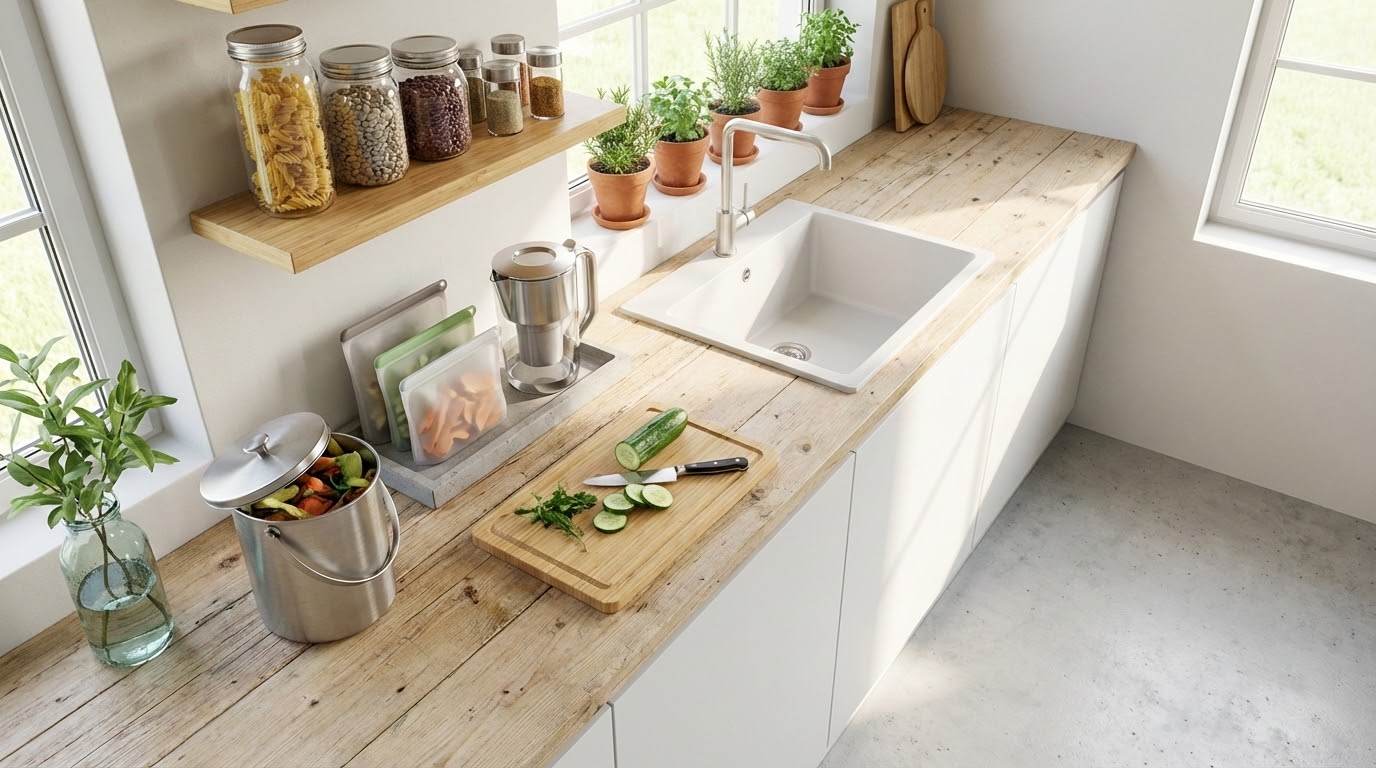
Welcome! Let’s explore how to create a beautiful and functional space that supports a more sustainable household. Your cooking area is the heart of your home, a place of connection and creation.
It’s also often the largest source of daily trash. This makes it the perfect spot to begin a meaningful transformation. The goal isn’t about achieving absolute perfection overnight.
Think of it as a journey toward low-waste living. It’s about making mindful choices that reduce your environmental impact one step at a time. This approach is both practical and powerful.
You can start by using what you already own more effectively. As items run out, you can then choose better, eco-friendly alternatives. Small, consistent swaps truly add up.
This guide shares simple and affordable solutions. We’ll cover everything from smart food storage to minimalist design principles. Our aim is to make sustainable living feel effortless and rewarding for your daily life.
Key Takeaways
- The kitchen is an ideal starting point for reducing household waste.
- “Zero waste” is better understood as a gradual process of low-waste living.
- Mindful consumption and using existing items are foundational principles.
- Small, sustainable changes collectively create a significant positive impact.
- Practical and stylish solutions can make this transition simple and enjoyable.
Defining a Zero-Waste Kitchen
Transforming your cooking space into a low-waste haven begins with redefining the goal itself. The phrase “zero waste” is not a literal target of producing no trash.
It represents a philosophy of progress, not perfection. This approach focuses on making consistent, mindful choices to lessen your environmental footprint.
Zero waste living is a gradual journey. It starts with using what you already own more effectively.
Your home’s heart is often its biggest source of household waste. This creates a significant environmental problem from packaging and food scraps.
Yet, this same area offers the greatest chance for positive change. The core of this lifestyle is a simple mantra: refuse, reduce, reuse, rot, and recycle.
Your personal path to sustainability will look unique. The true aim is to find a way that fits your life and reduces waste thoughtfully.
Zero-Waste Kitchen Ideas: Embracing Bulk Buying & Minimal Packaging
One of the most powerful steps you can take is to rethink how you shop for groceries. Buying food in bulk dramatically cuts down on the amount of packaging waste you bring home. This simple shift is both effective and economical.
Most grocery stores now have bulk bins filled with dry goods. You can find grains, nuts, spices, and baking supplies there. The best part is you purchase exactly the amount you need, reducing food waste.
Always bring your own jars or cloth bags to fill. Remember to have the cashier note the container’s empty weight, called the tare weight. This ensures you only pay for the product inside.
You’ll often save money by avoiding the cost of fancy plastic wrapping. Your money goes toward the food itself. This makes bulk buying a win for your wallet and the planet.
Finding fresh produce without plastic can be a challenge. Your local farmers market is a great solution. You can often find loose fruits and vegetables with minimal packaging there.
Many brands and stores are now prioritizing sustainable options. If your local store doesn’t have a bulk section, don’t hesitate to ask for one. Your request can help drive positive change.
Repurposing and Reusing Kitchen Containers
Your pantry is likely already filled with potential storage heroes waiting for a second life. Before buying anything new, take a quick inventory of your existing items.
Glass jars from pasta sauce or pickles are perfect for this. They offer a safe, free way to store your dry goods. Giving these jars a new purpose extends their life and keeps your food fresh.
Get creative with repurposing. A beautiful wine bottle can become a stylish dispenser for olive oil. Old containers can find new roles as planters or compost collectors.
Beyond glass, consider other durable materials for food storage. Stainless steel, silicone, and bamboo are excellent plastic-free choices. These containers are versatile for pantry organization, leftovers, and freezing.
It’s also a smart health choice. Some plastic containers can leach chemicals into your food over time. Transitioning to safer alternatives protects your well-being.
Prepping To-Go Meals with Eco-Friendly Options
Taking meals on the go doesn’t have to mean contributing to the growing plastic pollution problem. Single-use takeaway packaging ranks as the third-largest category of ocean plastic. This makes your lunch choices more important than you might think.
Reusable containers offer a simple solution that dramatically cuts down on waste. Stainless steel bento boxes, bamboo containers, and trusty glass jars keep food fresh without creating trash. These durable options work beautifully for everything from salads to soups.
For wrapping sandwiches or covering bowls, consider beeswax wraps or vegan alternatives. They’re washable, reusable, and compostable at the end of their long life. This swap eliminates the need for plastic wrap entirely.
Ditch disposable plastic bags for reusable silicone versions like Stasher bags. They’re perfect for snacks, sandwiches, and even freezer storage. Their durability makes them a smart investment that pays off over time.
Get creative with mason jars for layered salads, overnight oats, or colorful grain bowls. These versatile containers make meal prep visually appealing and practical. They’re perfect for transporting your favorite dishes.
Keeping a set of reusable containers, utensils, and cloth napkins in your car or work bag ensures you’re always prepared. This simple habit helps you refuse disposable options when eating out. Small changes like this add up to significant waste reduction over time.
Stocking Up with Reusable Produce Bags
Many shoppers overlook a simple opportunity to reduce plastic waste in the produce aisle. Those thin plastic bags seem convenient, but they’re actually optional. You don’t need to use them for your fruits and vegetables.
Reusable produce bags offer a better way to shop. Made from lightweight materials like organic cotton mesh, they barely add any weight at checkout. These washable alternatives are durable and practical for regular use.
For items with natural peels like bananas or oranges, you can skip bags entirely. Just place them directly in your cart. Bringing your own bags also has hygiene benefits since store bags get handled by many people.
Start with about five bags in different sizes. This versatile set handles various shopping needs beautifully. They’re great for bulk items, travel organization, or carrying snacks.
Keep your produce bags inside your main shopping tote. This simple habit ensures you never forget them. Making the sustainable choice becomes effortless every time you visit the store.
Minimizing Waste with Reusable Paper Towels & Cleaning Tools
Switching from disposable to reusable cleaning tools offers both environmental and financial benefits. Americans generate a staggering 3.8 million tons of paper towel waste annually according to EPA data. This represents a significant opportunity for reducing household trash.
Swedish dishcloths serve as excellent alternatives to traditional paper products. One cloth can absorb the equivalent of 17 rolls of paper towels. When it eventually wears out, this plant-based cellulose product can be composted.
Multiple reusable options exist for different cleaning needs. Consider cloth napkins, tea towels, or rags made from old t-shirts. Some people even use “unpaper towels” that snap onto a roll for convenience.
The financial savings add up quickly over time. The average person uses about 80 rolls of paper towels each year. Making this simple swap reduces both landfill waste and shopping expenses.
Beyond towels, consider natural cleaning tools as well. Wooden dish brushes and coconut fiber scrubbers work effectively. These natural options don’t shed microplastics into waterways like conventional plastic sponges.
Maintaining reusable cloths is straightforward. Keep a designated bin for dirty cleaning rags. Wash them regularly and have enough on hand to rotate throughout the week.
Turning Food Scraps into Sustainable Assets
It might surprise you to learn that food scraps make up a staggering 16.5% of all landfill waste in the United States. When this organic matter decomposes without oxygen, it releases methane. This greenhouse gas is 25 times more potent than carbon dioxide.
Before composting, get creative with repurposing. You can regrow green onions by placing the root ends in a glass of water. Collect vegetable peels and ends in a freezer container.
Once full, boil these ingredients to create a flavorful homemade stock. This is a fantastic way to use every part of your produce.
Other scraps have unexpected uses. Citrus peels can infuse vinegar for a natural cleaning solution. Soaking banana peels in water creates a potassium-rich fertilizer for plants.
For scraps you can’t repurpose, composting is the ultimate solution. This process transforms waste into nutrient-rich food for your garden. Start with a small container on your counter to collect scraps as you cook.
Choose a system that fits your life, like an outdoor compost bin or a tumbler. If home composting isn’t possible, check for local community programs. They often accept food scraps.
Embrace recipes that use typically discarded parts. Roasted cauliflower leaves are a delicious treat. Finding a way to use every last piece is a rewarding step in reducing waste.
Sustainably Satisfying Your Beverage Routine
Your morning coffee or tea ritual can easily align with your eco-friendly goals. For coffee lovers, this doesn’t mean giving up your brew. It means ditching single-use pods, which even their inventor regrets.
Start by buying whole beans in bulk. Grind them fresh at home using a manual grinder. Then, brew with a plastic-free method like a French press.
Used coffee grounds are a fantastic resource. Toss them directly into your compost or garden soil. They act as a natural fertilizer that worms love.
Always carry a reusable thermos for your on-the-go drinks. This simple habit cuts down on disposable cup waste significantly.
For tea drinkers, choose loose-leaf varieties over bagged options. Many tea bags contain plastic and can release microplastics into your drink.
Use a stainless steel kettle to boil water and a reusable infuser to steep your leaves. This avoids plastic contact and reduces electronic waste.
After enjoying your cup, compost the used tea leaves. You can even explore making homemade infusions or cold brew to further reduce packaging.
Incorporating Recycling and Second-Hand Solutions
The journey toward a more eco-friendly home involves understanding that recycling, while important, should be our final option rather than our primary strategy. The five principles of sustainable living follow a specific order: refuse, reduce, reuse, rot, and recycle.
Recycling comes last because it doesn’t solve the root of the plastic waste problem. Many materials have low recycling rates, making prevention through the first four Rs more effective.
Despite our best efforts, some packaging and plastic waste is currently unavoidable. When this happens, responsible recycling becomes our essential last resort. Always check your local municipality’s guidelines since rules vary significantly.
Proper sorting and cleaning containers prevents food contamination that can ruin entire recycling batches. Plastic recycling presents particular challenges – black plastic from takeout containers often isn’t recyclable at all.
For items your local program won’t accept, services like TerraCycle offer solutions. They handle difficult materials like batteries, lightbulbs, and electronic waste through mail-back programs.
Remember that items are only “single-use” if you use them once. Wash and reuse plastic bags and containers until they’re no longer functional. This extends their life and reduces demand for new plastic.
When you need new items like dishes or cookware, consider second-hand options first. Support brands with take-back programs, and ensure proper disposal to keep materials out of landfills.
Designing a Minimalist, Zero Waste Kitchen Layout
Thoughtful organization can transform how you interact with food and reduce waste naturally. A truly sustainable space isn’t just about the products you choose. It’s about creating a design that prevents waste before it happens.
Adopt a minimalist mindset toward gadgets and tools. Most single-purpose items are unnecessary when basic tools work just as well. Follow two simple rules: if you don’t need it, don’t buy it. If you do purchase something, choose quality items that will last for years.
Your refrigerator organization plays a huge role in reducing food waste. Make sure you can see everything when you open the door. Create a “Must Eat Now” shelf for items nearing their expiration date.
Proper storage extends the life of your groceries. Store carrots in water to maintain crispness. Keep ethylene-producing fruits away from sensitive vegetables. Avoid refrigerating citrus fruits for better flavor.
A clean, uncluttered space not only looks appealing but functions more efficiently. This makes it easier to maintain your sustainable habits over time. Simple design choices support your waste reduction goals beautifully.
Conclusion
Remember that every mindful choice you make adds up to a greener, more efficient living space. Your cooking area, as the heart of the home, offers the greatest opportunity for positive change.
This transformation is a personal journey, not a race. Focus on progress, not perfection. Start with one or two simple swaps that feel right for your life.
These small steps save money over time and collectively reduce landfill waste. You have the power to create a beautiful, functional space that supports your values.
What sustainable change will you try first? Share your experiences and inspire others on this rewarding path.
FAQ
What exactly is a zero-waste kitchen?
A zero-waste kitchen is a space designed to drastically cut down on trash sent to the landfill. It focuses on preventing waste from entering your home in the first place. This means choosing items with minimal or no packaging, reusing containers, and finding creative uses for food scraps, like composting. The goal is to create a closed-loop system right in your home.
Where is the best place to start when trying to reduce kitchen waste?
A fantastic first step is to tackle your shopping habits. Bring your own reusable produce bags and containers to stores that offer bulk bins. Buying staples like rice, beans, and spices in bulk cuts out a huge amount of plastic and cardboard packaging. This simple change makes a big impact on your household’s overall waste.
How can I deal with vegetable peels and other food scraps?
Don’t toss those peels and ends! They are valuable resources. You can save them in a bag in the freezer to make a delicious homemade vegetable stock. For items you can’t use, like coffee grounds or eggshells, start a compost bin. Composting turns these scraps into nutrient-rich soil for your plants, completing the cycle of sustainable living.
What are some easy swaps for single-use items like paper towels?
You can easily replace paper towels with reusable cloths or rags. Old t-shirts or towels make excellent cleaning cloths. For wrapping food or covering bowls, consider beeswax wraps or silicone lids instead of plastic wrap. These swaps are not only better for the planet but also save you money over time.
Can I still enjoy beverages like coffee and tea in a low-waste way?
Absolutely! For coffee, opt for a reusable filter with ground beans instead of single-use pods. Loose-leaf tea is a great alternative to tea bags, which often contain plastic. Use a stainless-steel strainer or a compostable tea bag. These small changes help reduce a significant amount of daily trash from your beverage routine.