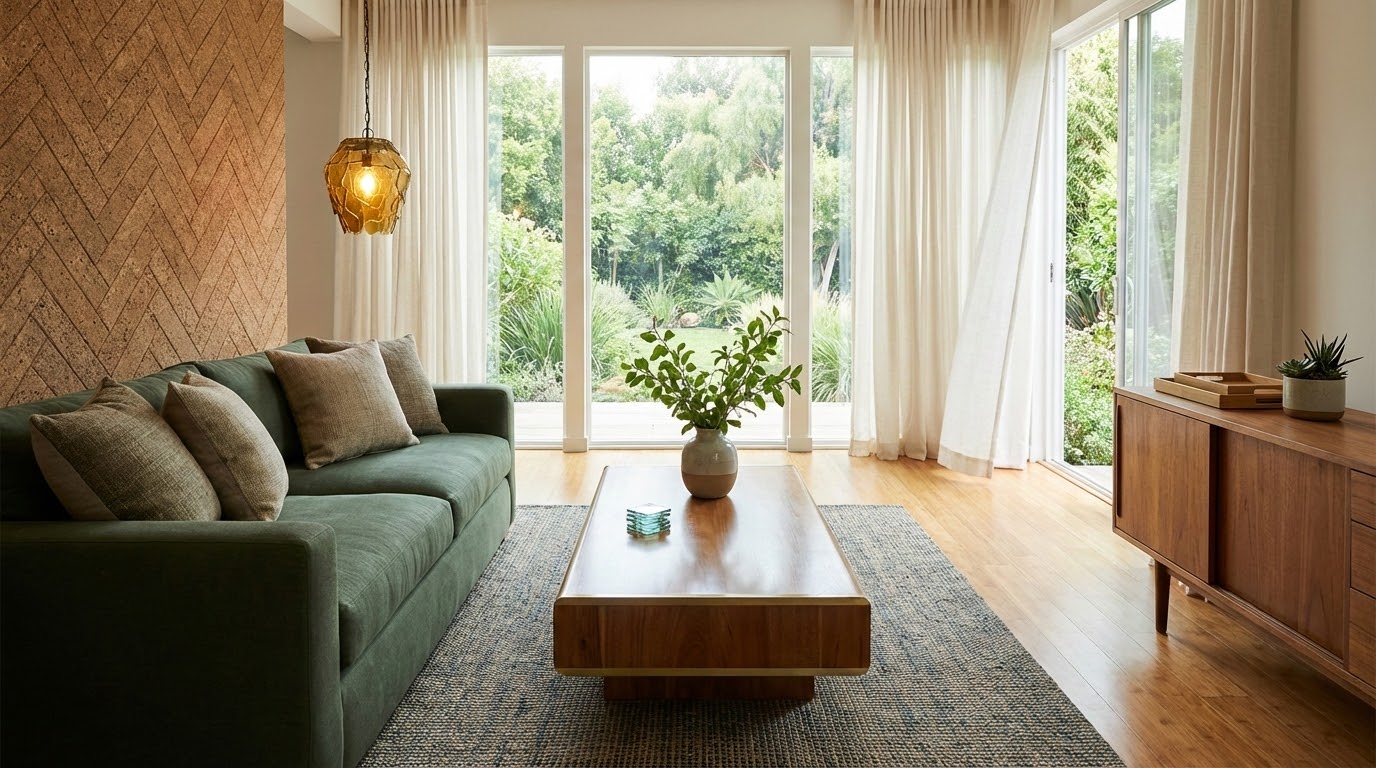
Welcome to an exploration of how conscious design choices can transform your living space. Today’s homeowners are discovering that beautiful interiors and environmental responsibility go hand in hand.
The concept of sustainable luxury represents a shift in how we think about decorating our spaces. It’s no longer just about being environmentally conscious—it’s about making sophisticated design decisions that benefit both your residence and the planet.
Modern design enthusiasts are finding that sustainability and luxury complement each other perfectly. These choices create beautiful, responsible living environments that feel good and make a positive impact.
This guide introduces nine remarkable options that combine aesthetic appeal with environmental benefits. Each selection offers practical solutions for your next design project, helping you create spaces that are both stunning and sustainable.
Choosing these alternatives represents an investment in your living environment’s beauty and our world’s health. You’ll gain detailed information about each option’s unique benefits and applications.
Discover why these selections are gaining popularity among design-conscious individuals. Get ready to make informed decisions about upgrading your interior spaces with conscious alternatives.
Key Takeaways
- Sustainable luxury combines beautiful design with environmental responsibility
- Eco-conscious options are now sophisticated design choices, not compromises
- Modern materials offer both aesthetic appeal and planet-friendly benefits
- Conscious design creates spaces that feel good and make a positive impact
- This guide provides practical solutions for your next interior project
- Learn about materials gaining popularity among design enthusiasts
- Make informed decisions to elevate your living environment
Introduction to Sustainable Luxury Home Decor
Today’s discerning homeowners are discovering that sophistication and sustainability create the perfect design partnership. This approach represents a significant shift in how we decorate our living spaces. Environmental responsibility now meets high-end aesthetics to create beautiful, conscientious rooms.
Choosing sustainable building materials dramatically reduces a residence’s carbon footprint. This means fewer harmful emissions enter our atmosphere. The environmental impact of these choices extends to future generations, creating cleaner surroundings for everyone.
Improved energy efficiency delivers direct financial benefits to property owners. Lower monthly bills and reduced long-term costs make these options economically smart. People enjoy comfortable living while saving money throughout the year.
Sustainable luxury isn’t about making sacrifices. It’s about selecting intelligent alternatives that enhance your quality of life. These choices improve both your living environment and your overall well-being.
A growing movement prioritizes durable, beautiful options with environmental benefits. These selections address immediate concerns like indoor air quality. They also support long-term goals like reducing energy consumption and minimizing ecological harm.
Spotlight: eco-friendly materials for home
A significant shift is occurring in how we source and implement construction elements for residential spaces. The building industry contributes substantially to global environmental challenges. Understanding embodied carbon reveals why this matters.
Embodied carbon represents emissions created during manufacturing and construction phases. This accounts for 10% of all global energy-related CO2 emissions. Choosing environmentally friendly alternatives directly addresses this impact.
Our featured selections offer practical solutions for various applications. Each material provides unique sustainability benefits while maintaining aesthetic appeal. These options help conserve natural resources and reduce waste.
These construction choices aren’t experimental concepts. They represent proven, accessible solutions available today. Individuals can make measurable differences through conscious building decisions.
Upcoming sections will explore each material’s specific applications and benefits. You’ll gain practical knowledge for your next project. This information helps create healthier living environments while supporting our planet.
Bamboo: A Renewable Material for Stylish Spaces
Among sustainable building options, bamboo stands out as nature’s speed champion in the plant kingdom. This remarkable grass grows faster than any other plant worldwide, reaching maturity in just three to five years.
Traditional hardwoods take decades to mature, making bamboo an exceptionally renewable choice. It requires minimal energy to cultivate compared to other building materials.
Bamboo brings incredible versatility to interior design projects. You’ll find it in sleek flooring, elegant cabinetry, and modern wall panels. This single material can transform multiple areas of your living environment.
The sustainability profile of bamboo is truly impressive. Construction teams can use entire bamboo stems with virtually no waste. Any leftover pieces break down naturally since bamboo is biodegradable.
Despite being technically a grass, bamboo demonstrates remarkable strength and durability. It handles high-traffic areas beautifully and works well for structural applications.
Harvesting bamboo has minimal environmental impact compared to extracting ores or cutting large trees. The plant regenerates quickly without needing replanting after each harvest.
Designers love bamboo’s warm, natural aesthetic that complements both contemporary and traditional spaces. Its organic beauty adds character to any room while supporting sustainable building practices.
Bamboo’s global availability makes it accessible for construction projects worldwide. This rapidly-growing plant thrives across multiple continents, ensuring easy sourcing for your next improvement project.
Recycled Steel: Building a Sustainable Structure
Among the most recycled substances in America, steel provides a durable foundation for conscious building projects. This metal offers incredible strength while supporting environmental goals.
Recycling steel creates impressive carbon benefits. Processing just one kilogram of scrap prevents 1.5 kilograms of emissions from entering our atmosphere.
Steel maintains its quality through endless recycling cycles. This material never loses strength or durability when reprocessed.
The construction industry already embraces recycled steel extensively. Approximately 40% of new steel production uses recycled content.
Builders use recycled steel for framing and structural components. Beams, bars, and columns provide reliable support for any project.
Choosing recycled steel reduces demand for virgin resources. This means less mining and environmental disruption.
Recycled steel offers the same structural integrity as new steel. Property owners gain durability with superior environmental benefits.
Cork and Reclaimed Wood: Natural Charm Meets Sustainability
Cork brings a remarkable story of sustainability right from the forest floor. Harvesters carefully remove only the bark, allowing trees to continue growing. This process preserves forests while providing a truly renewable resource.
The hypoallergenic nature of cork makes it ideal for improving indoor air quality. It naturally resists mold and pests, creating healthier living environments. Families with allergies particularly benefit from this characteristic.
Excellent natural insulation properties help reduce energy costs throughout the year. Cork maintains comfortable temperatures with minimal heating or cooling. This thermal efficiency translates to noticeable savings on utility bills.
Versatile applications include flooring, wall coverings, and soundproofing solutions. The material adds warmth and acoustic comfort to any room. Its cellular structure even helps store carbon, adding environmental value.
Reclaimed wood gives beautiful materials a second life while reducing waste. This approach directly addresses the construction industry’s massive debris problem. In 2018 alone, the sector generated 600 million tons of waste.
Each piece of reclaimed lumber carries unique character through weathered patinas and distinctive markings. These elements create flooring, beams, and furniture that tell compelling stories. The result combines rustic charm with genuine environmental responsibility.
Hempcrete: Innovative and Energy-Efficient Construction
Imagine a building material that actually improves environmental health while creating comfortable living spaces. That’s hempcrete. This innovative substance is gaining recognition in sustainable construction for its lightweight composition and easy installation.
Hempcrete’s most remarkable feature is its carbon-negative nature. It absorbs more carbon dioxide than it emits during production. This actively reduces a property’s environmental impact, making it a standout choice.
Excellent insulation properties help lower energy costs significantly. Hempcrete maintains stable indoor temperatures with minimal heating or cooling requirements. Residents enjoy comfortable spaces year-round while saving on utilities.
This versatile building material works well in walls, insulation systems, and roofing applications. Its lightweight nature makes handling and installation easier than traditional options. Builders appreciate how it combines functionality with sustainability.
Durability and breathability help regulate humidity and prevent moisture problems. These characteristics ensure long-lasting performance that conventional construction materials often lack. Hempcrete delivers both environmental and practical benefits.
Low-VOC Paints and Finishes for a Healthier Home Environment
When it comes to creating healthier indoor environments, the paint on your walls plays a surprisingly important role. Traditional paints release volatile organic compounds (VOCs) that can linger in your air for months. These chemicals may cause eye irritation, respiratory issues, and headaches with prolonged exposure.
Low-VOC options dramatically reduce these harmful emissions while maintaining excellent coverage and color quality. They work beautifully on interior and exterior surfaces throughout your residence. You’ll find them perfect for cabinets, furniture, and various applications.
The improved indoor air quality makes spaces safer for families, children, and pets. Reduced odor during application means you can return to rooms sooner after painting. This is especially valuable in bedrooms where people spend extended time.
Modern low-VOC products offer the same wide range of colors and finishes as traditional paints. You don’t need to sacrifice style for health benefits. These innovative solutions combine aesthetic appeal with responsible choices for your living environment.
Solar Panels: Harnessing Renewable Energy for Modern Living
The transition to solar power marks a significant advancement in how residences generate their own electricity. This technology captures abundant sunlight and converts it into clean energy for daily use.
Homeowners enjoy substantial savings on monthly utility bills while reducing their environmental footprint. These financial benefits accumulate over time as traditional energy costs continue rising.
A compelling incentive makes solar systems more accessible than ever. U.S. taxpayers qualify for a 30% federal tax credit on installation costs.
Modern panels integrate beautifully with roof designs while maximizing energy production. Technological improvements have created sleeker, more efficient systems.
Solar energy provides independence from utility rate fluctuations and grid instability. This forward-thinking investment increases property value while supporting sustainable energy futures.
Choosing solar represents both practical financial planning and responsible environmental stewardship. It’s an environmentally friendly solution that pays dividends for years to come.
Straw Bales and Green Roof Systems: Eco-Friendly Insulation and Roof Solutions
Straw bales might seem like an agricultural leftover, but they’re revolutionizing sustainable insulation. This natural resource offers exceptional thermal performance at an affordable price. When their useful life ends, they return completely to the earth.
The insulation value of straw bales is truly impressive. They provide three times the heat resistance of traditional insulation options. This dramatically reduces energy consumption while maintaining comfortable indoor temperatures year-round.
Builders use these bales in wall construction and natural building projects. They’re often tied together with bamboo or wood to create durable structures. Properly maintained buildings using straw can stand for over a century.
From a sustainability perspective, straw bales have very low embodied energy. They’re 100% biodegradable and come from renewable sources. This makes them an economically smart choice with minimal environmental impact.
Green roof systems offer multiple practical benefits alongside their environmental advantages. These living roofs provide natural insulation that reduces heat transfer and energy use. They manage stormwater by absorbing up to 65% of rainfall.
The water management capabilities ease pressure on local drainage systems. Green roofs delay water flow by as much as three hours during heavy storms. This natural filtration system improves water quality while reducing runoff.
Vegetation layers create habitats for local biodiversity while adding visual appeal. Both straw bale insulation and green roof systems combine functionality with responsibility. Homeowners gain tangible advantages in energy savings, water management, and thermal regulation.
Eco-Friendly Concrete Alternatives: Pioneering Sustainable Construction
The construction industry is witnessing a quiet revolution in how we approach foundational materials. Traditional concrete production accounts for 8% of global CO2 emissions, making it extremely energy-intensive.
Innovative alternatives like ashcrete, ferrock, and geopolymer concrete are transforming building projects. These options reduce harmful emissions by utilizing industrial byproducts instead of cement.
Ferrock stands out as an exceptional building material created from waste steel dust. This substance is actually stronger than traditional concrete while being extremely sustainable.
The most remarkable characteristic of ferrock is its CO2-negative nature. Instead of emitting carbon dioxide when drying, it actively absorbs and binds to it.
These concrete alternatives work well for foundations, driveways, and pathways. Clay represents another green option with centuries of proven use in construction.
Modern clay bricks offer hard-wearing, recyclable solutions with strong thermal insulation. Builders can significantly lower their carbon footprint without sacrificing quality.
These innovative materials deliver both environmental benefits and structural integrity. They represent practical choices for sustainable construction projects.
Smart Energy Control: Integrating Thermostats and Energy Management
The latest generation of smart thermostats functions like a personal energy assistant for your residence. These advanced systems optimize temperature control and monitor appliance energy use throughout the day.
Modern units track multiple factors including real-time energy costs and individual appliance consumption. This detailed monitoring helps maximize efficiency while reducing monthly bills.
Convenience features allow remote adjustment from computers or mobile devices. Advanced models can email alerts if appliances malfunction, providing ultimate control.
Smart systems schedule appliance operation during non-peak hours when electricity rates are lowest. They automatically turn off energy-hungry devices like water heaters when no one’s home.
Intelligent programming ensures hot water is ready exactly when needed. The system times water heater restarts to provide evening showers while avoiding unnecessary daytime use.
While these systems require upfront investment and possible broadband upgrades, the payoff is significant. Even with efficient appliances, precise control saves substantial additional energy.
This technology complements sustainable design by addressing ongoing consumption. It creates a comprehensive approach to responsible living that works with your chosen building elements.
Conclusion
Creating a beautiful living space while respecting our planet has never been more achievable. The nine eco-friendly materials we’ve explored each offer unique benefits that blend luxury aesthetics with environmental responsibility.
Every choice you make contributes to reducing your carbon footprint. From bamboo flooring to solar panels, these decisions collectively lower energy consumption and environmental impact.
The benefits extend beyond the planet to your daily life. You’ll enjoy improved energy efficiency, lower bills, and the satisfaction of a home that reflects your values.
Start by researching options relevant to your specific projects. Remember that sustainable design isn’t about perfection but thoughtful choices that create healthier spaces for future generations.
Leave a Reply