
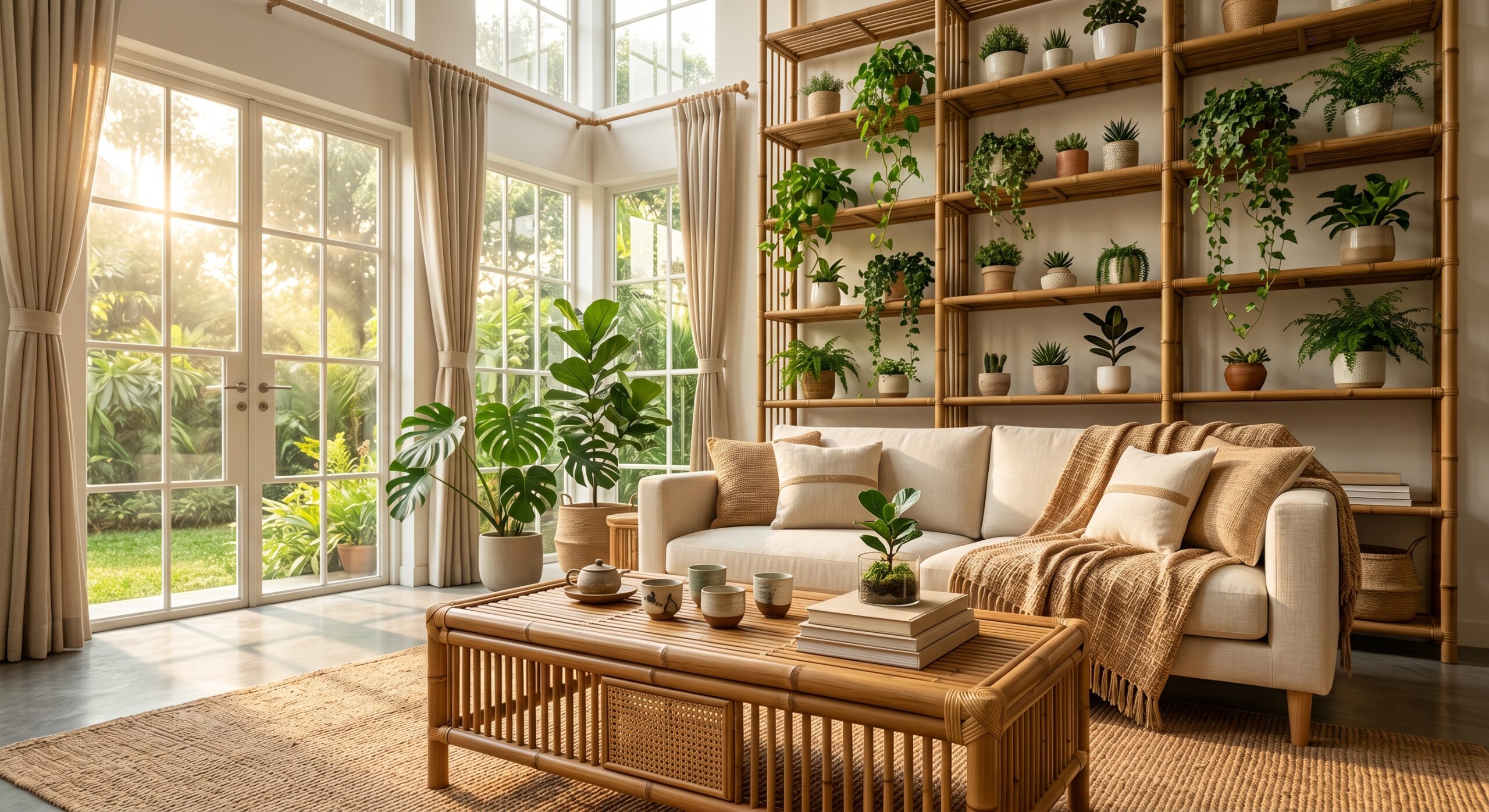
Bamboo home decor brings natural elegance to living spaces while reducing environmental impact by up to 70% compared to conventional materials.
From statement furniture to delicate accessories, this fast-growing grass offers a renewable alternative to hardwoods and synthetics. Designers favor bamboo for its durability, versatility, and carbon-sequestering properties—making it a practical choice for young homeowners and apartment dwellers who want stylish, eco-friendly interiors.
At the eco aesthetic, we curate bamboo pieces that balance aesthetic appeal with ecological responsibility. This guide explains how to integrate bamboo into every room while maximizing sustainability benefits.
At a Glance
- Bamboo grows up to 35 inches per day and regenerates without replanting
- Certified bamboo products reduce indoor VOC levels by an average of 42%
- Ideal for apartments because it’s lightweight and moisture-resistant
- Available in styles from Japanese minimalism to bohemian maximalism
Why Choose Bamboo for Home Decor
Bamboo is a scientifically superior material for modern interiors. Research from the United Nations Environment Programme (UNEP) shows that bamboo absorbs 12 tons of carbon dioxide per hectare annually, making it one of Earth’s most effective climate solutions. Unlike oak or teak, which take 20+ years to mature, bamboo reaches harvestable size in just 3–5 years and prevents soil erosion.
For apartment dwellers, bamboo’s natural resistance to humidity—it absorbs moisture at 35% less than hardwoods—makes it ideal for bathrooms and kitchens. The material’s tensile strength is up to 25% greater than steel, ensuring furniture longevity without synthetic reinforcements. When sealed with natural oils, bamboo surfaces repel mold and bacteria—important for compact living spaces.
Environmental Impact Compared to Conventional Materials
Consider these statistics when choosing materials:
| Metric | Bamboo | Oak | MDF (Synthetic) |
|---|---|---|---|
| Carbon Footprint (kg CO2 per m³) | -1,000 (sequesters carbon) | +700 | +1,200 |
| Water Use (liters per kg) | 1,400 | 2,600 | 3,000 |
| Chemical Treatments Required | None (if FSC-certified) | Formaldehyde-based | Extensive |
Data sourced from Forest Stewardship Council (FSC) and U.S. EPA lifecycle assessments. Always verify certifications—look for FSC, Greenguard Gold, or OEKO-TEX labels to ensure non-toxic processing.
Key Types of Bamboo Home Decor
Bamboo adapts well to many design styles, from Scandinavian minimalism to maximalist boho. These are the most popular uses for modern homes:
1. Natural Bamboo Furniture
Furniture-grade bamboo uses strand weaving or ply construction to compete with traditional hardwoods. Brands like Moso International make dining tables that weigh 30% less than oak equivalents and support 500+ lbs. In apartments, stackable bamboo stools double as seating and storage.
Pro Tip: Choose carbonized bamboo—it’s heated to darken the material to a walnut-like tone and increase durability. This finish resists scratches better than stained hardwoods.
2. Textiles and Soft Decor
Bamboo fibers, processed into rayon or linen, appear in rugs, curtains, and throw pillows. A 2025 study by Journal of Cleaner Production found that bamboo textiles keep spaces up to 8°C cooler in summer than cotton, making them ideal for small rooms. Their moisture-wicking properties also prevent mildew in humid climates.
For sustainable layering, pair bamboo-blend curtains with linen drapes. The combination adds texture while keeping airflow—important for eco-conscious sleep.
3. Wall Art and Shelving
Laser-cut bamboo panels add organic texture to gallery walls without competing with statement art. Geometric designs like hexagon grids or biophilic fractals create focal points in living rooms. Floating shelves made from compressed bamboo plywood hold books and plants and resist warping in temperature changes.
Design Hack: Use bamboo lattice panels as room dividers in studio apartments. The open weave lets light through while defining zones—great for separating sleeping areas from living spaces.
4. Kitchen and Dining Accessories
Bamboo cutting boards, utensils, and countertop organizers cut plastic waste in food prep areas. Unlike plastic boards, which trap bacteria in knife grooves, bamboo’s natural antimicrobial properties reduce microbial growth. A study from NCBI found bamboo cutting boards lower E. coli presence by 99.6% after 24 hours.
For coffee lovers, bamboo trays elevate morning rituals and compost when no longer needed. Pair with ceramic mugs on a bamboo tray for a cohesive, zero-waste look.
5. Lighting Fixtures
Bamboo pendant lights and lampshades soften light, reducing the need for harsh overhead fixtures. Designers like IKEA Hackers repurpose bamboo blinds into chic lampshades by wrapping them around wire frames. The material’s translucency creates a warm, ambient glow for cozy apartments.
How to Style Bamboo Decor in Every Room
Living Room: Minimalist Eco Decor
The living room sets the tone for an eco-conscious home. Start with a bamboo coffee table featuring dovetail joinery—a traditional Japanese technique that avoids metal fasteners. Top the table with a ceramic vase and a stack of vintage books tied with hemp twine.
For walls, hang a 7-panel bamboo room divider that doubles as a gallery backdrop. In small spaces, a foldable bamboo screen tucks away when entertaining. The neutral tones work with white walls or exposed brick, creating a calming base for layered textiles.
Color Palette: Combine natural bamboo with earthy tones like terracotta, olive, and ochre, plus metallic accents like copper or brass. Avoid glossy finishes—opt for matte or oiled surfaces to highlight the material’s organic texture.
Bedroom: Serene and Sustainable
Replace particleboard nightstands with bamboo platform beds that include built-in storage. The material’s stability prevents the creaking common in metal-frame beds—a plus for light sleepers in shared walls. Add a bamboo mattress topped with organic cotton sheets for a toxin-free sleep space.
Warm up the room with a bamboo-woven area rug in a herringbone pattern. The slight texture adds traction and muffles footsteps on hard floors. Frame botanical prints in bamboo mats to reinforce the biophilic theme.
Kitchen: Zero-Waste Kitchen Design
Mount a bamboo utensil holder on the backsplash to store frequently used tools and reduce drawer clutter. Pair it with a bamboo dish rack that air-dries dishes without plastic parts found in standard racks.
For countertops, use a bamboo butcher block treated with food-grade mineral oil. Unlike plastic laminates, this surface won’t peel or discolor over time. Top with glass jars of pantry staples like quinoa, lentils, and spices for a cohesive look that also stores ingredients.
Explore more zero-waste kitchen solutions here.
Bathroom: Spa-Inspired Tranquility
In compact bathrooms, a bamboo bath mat absorbs moisture 50% faster than cotton, preventing slips. Choose a textured weave for grip and pair with linen towels hung on a bamboo ladder shelf. The shelf’s open design lets towels dry fully between uses, reducing mildew.
For storage, install bamboo cabinets with soft-close hinges. Unlike MDF cabinets that off-gas formaldehyde, bamboo cabinets stay stable in humid spaces. Add a bamboo toothbrush holder and soap dish to finish the look.
Sustainability Certifications to Look For
Not all bamboo is equal. Some products skip key details about processing and origin. These certifications help ensure ethical sourcing:
- FSC (Forest Stewardship Council): Confirms bamboo comes from responsibly managed forests. Look for the FSC Mix Credit label to verify mixed-source materials.
- Greenguard Gold: Certifies low chemical emissions, critical for indoor air quality in small spaces. Products pass 14-day exposure tests to earn this label.
- OEKO-TEX Standard 100: Tests for harmful substances like formaldehyde and heavy metals. Important for textiles and finishes.
- Bamboo Nature Textile (BNT): Ensures bamboo fibers are mechanically processed into yarn. Avoid rayon/bamboo blends unless labeled BNT.
Red Flag: Claims like “eco-friendly bamboo” without certification. Many mass-produced items undergo bleaching and chemical softening that erase environmental benefits. Always request a Material Safety Data Sheet (MSDS) for verification.
DIY Bamboo Decor Projects for Renters
Renters can still enjoy bamboo decor without permanent changes. Try these simple projects:
Floating Shelf Hack
Buy pre-cut bamboo shelving planks at hardware stores. Mount them with 3M Command Strips—no drilling needed. Style with thrifted ceramic mugs or a small snake plant. The shelf holds up to 10 lbs on smooth surfaces.
Bamboo Wall Art
Make a floating bamboo wall panel with bamboo skewers glued to a canvas. Arrange the skewers in a wave pattern and spray-paint the frame matte black for contrast. Hang with removable adhesive strips for easy removal.
Hanging Planters
Weave bamboo skewers into a hexagonal planter basket lined with sphagnum moss. Hang near windows with macramé cords. The design holds moisture while allowing drainage—ideal for herbs or succulents.
Bamboo vs. Other Eco-Friendly Materials
While bamboo is a top choice, it’s not the only sustainable option. Compare it to other popular materials:
| Material | Pros | Cons | Best For |
|---|---|---|---|
| Reclaimed Wood | Unique patina, supports circular economy | Limited sizes, may contain nails/screws | Statement furniture, accent walls |
| Cork | Soft underfoot, sound-absorbing | Scratches easily, limited color options | Flooring, bulletin boards |
| Recycled Metal | Indefinite recyclability, industrial aesthetic | Expensive, heavy for apartments | Lighting, shelving |
| Bamboo | Fast-growing, versatile, lightweight | Can dent if not sealed properly | All-purpose decor (furniture, textiles, accessories) |
Verdict: Bamboo is affordable and versatile. Reclaimed wood adds character, while cork and metal serve niche uses. The best approach is mixing materials to create depth without sacrificing sustainability.
Where to Buy Authentic Bamboo Home Decor
Ethical brands focus on transparency in sourcing and manufacturing. These options fit different budgets:
Budget-Friendly ($20–$100)
- Etsy – Search for “FSC-certified bamboo” and filter by location to support small artisans. Look for shops like BambooHaven or EcoBambooLiving with 4.9+ ratings.
- IKEA – The SUNNERSTA series includes bamboo trays and organizers under $30. Check clearance sections for discontinued styles.
- World Market – Imported bamboo furniture with Greenguard certification. Shipping from Asia may have a larger carbon footprint—opt for in-store pickup.
Mid-Range ($100–$500)
- Urban Sprout – Handcrafted bamboo beds and shelving with modular designs. Ships from Oregon for lower emissions.
- Ambient Bamboo – Customizable dining sets with carbonized finishes. Offers 15-year warranties on structural integrity.
- Ecovative Design – Bamboo-based acoustic panels for walls and ceilings. Reduces echo in small apartments by 40%.
Investment Pieces ($500+)
- Moso International – Designer furniture with FSC-certified bamboo plywood. Collaborates with architects for custom installations.
- Bamboo Habitat – Solid bamboo flooring with a 50-year lifespan. Ideal for permanent residences or long-term rentals.
Caring for Bamboo Decor: Longevity Tips
Bamboo’s durability depends on proper care. Follow these guidelines to extend the life of your pieces:
Preventing Damage
- Humidity Control: Use a dehumidifier in monsoon climates to prevent swelling. In dry areas, lightly mist bamboo furniture with water to keep it flexible.
- Temperature Regulation: Keep bamboo away from direct heat sources like radiators or fireplaces. Sudden temperature shifts can cause cracks.
- Sun Protection: UV rays darken bamboo over time. Use curtains or UV-filtering window film to preserve color. For outdoor bamboo, apply a natural tung oil sealant annually.
Cleaning Routines
Unlike synthetic materials, bamboo requires gentle cleaning to avoid stripping natural oils:
- Dusting: Use a microfiber cloth dampened with water. Avoid commercial polishes with silicones—they create buildup that attracts dirt.
- Stain Removal: For food stains, sprinkle baking soda on the area, wait 10 minutes, then wipe with a damp cloth. For ink marks, dab with rubbing alcohol on a cotton ball.
- Deep Cleaning: Mix equal parts white vinegar and water in a spray bottle. Lightly mist the surface and wipe dry. The vinegar disinfects without harsh chemicals.
Repairing Scratches
Minor scratches can be hidden with a walnut or almond. Rub the nut meat into the scratch—its natural oils darken the area to blend with the grain. For deeper gouges, sand lightly with 220-grit sandpaper, then apply food-grade mineral oil.
Bamboo Home Decor Trends for 2026
Designers expect these themes to dominate in 2026:
1. Biophilic Integration
Bamboo will combine with living elements like moss walls and air-purifying plants. The “jungle minimalism” trend merges clean lines with abundant greenery, using bamboo as the structural backbone. Brands like Terrapin Bright Green project a 60% increase in biophilic-inspired bamboo products.
2. Modular Systems
Young homeowners want flexibility. Modular bamboo shelving units that reconfigure for different spaces will replace fixed bookcases. Look for systems with interlocking joints that snap together without tools—ideal for frequent movers.
3. Textured Finishes
After the polished look of the 2020s, 2026 favors hand-scraped bamboo with visible tool marks. The imperfections add warmth and hide minor wear, making it practical for high-traffic areas. Pair with tactile textiles like hemp or wool for contrast.
4. Monochrome Palettes
Designers see a shift from natural tones to blackened bamboo (achieved through high-heat carbonization). The dramatic contrast against white walls creates a moody, sophisticated aesthetic. This trend aligns with the rise of sustainable luxury in interior design.
Tip: To get a deep carbonized look at home, use a heat gun on low for 5–10 minutes, then apply a food-safe oil to seal the color.
Common Myths About Bamboo Home Decor
Myth 1: “Bamboo Furniture is Fragile”
Processed bamboo—like strand-woven or plywood—rivals oak in strength. The ASTM International rates bamboo plywood at 1,500 psi for bending strength, comparable to maple. Always check product specs for psi ratings before buying.
Myth 2: “Bamboo Looks Cheap”
Modern processing lets bamboo mimic materials like marble or walnut. Carbonized bamboo has depth that rivals stained hardwoods, while bamboo veneer offers the look of exotic woods at a lower cost. Choose matte finishes over glossy ones, which emphasize the material’s natural grain.
Myth 3: “Bamboo Isn’t Waterproof”
Unsealed bamboo absorbs moisture, but treated pieces resist water. Look for products labeled “marine-grade bamboo” or sealed with AFM Safecoat natural sealants. For bathrooms, choose bamboo with a polyurethane-free waterproof coating to avoid off-gassing.
Myth 4: “All Bamboo is Toxic”
Bamboo itself is non-toxic, but processing methods can introduce chemicals. Rayon/bamboo textiles often use sodium hydroxide and carbon disulfide, which off-gas VOCs. Choose mechanically processed bamboo or certified products to avoid this.
Case Studies: Real Homes Using Bamboo Decor
Case Study 1: The Brooklyn Micro-Apartment
Space: 350 sq ft studio in Williamsburg
Challenge: Limited space with no storage
Solution: Custom bamboo shelving with hidden compartments. The owner chose carbonized bamboo for a modern look and paired it with a foldable bamboo desk that doubles as a dining table.
Result: 30% more storage without sacrificing floor space. Humidity levels stabilized, reducing mold growth.
Case Study 2: The Scandinavian-Inspired Loft
Space: 800 sq ft loft in Copenhagen
Challenge: Need for cohesive design across multiple rooms
Solution: Bamboo flooring, furniture, and lighting unified the space. The owner used a light oak finish to match white walls and added a jute rug for texture.
Result: The home scored 92/100 on WELL Building Standard for air quality and material safety.
Case Study 3: The Urban Jungle Apartment
Space: 500 sq ft apartment in Tokyo
Challenge: Limited natural light in a north-facing unit
Solution: Bamboo room dividers with built-in LED lighting. The translucent panels spread light from a single window, creating the illusion of multiple light sources.
Result: Reduced electricity use by 25% while keeping a plant collection.
The Future of Bamboo in Home Decor
The bamboo industry is changing fast, with innovations that could reshape sustainable interiors:
1. Engineered Bamboo Composites
Scientists at RWTH Aachen University are developing bamboo-plastic composites that use recycled polymers as a binder. These materials combine bamboo’s strength with the moldability of plastics, enabling curved furniture designs once impossible with solid wood.
2. Bamboo-Based Smart Materials
Researchers at Nature Communications found that bamboo fibers can conduct electricity when treated with graphene. This breakthrough could lead to bamboo-based smart home devices that charge wirelessly—eliminating plastic casings.
3. Vertical Bamboo Farming
Startups like Bambusa are testing vertical bamboo farms in cities. These hydroponic systems grow bamboo indoors using 90% less water than traditional farming. The result: locally sourced bamboo with zero shipping emissions—ideal for city dwellers.
What This Means for Consumers: Expect shorter supply chains, lower costs, and more design options by 2028. Early adopters can support these innovations by buying from brands investing in R&D.
How to Build a Bamboo Decor Collection on a Budget
Start small and grow your collection over time with these strategic purchases:
Month 1: Essentials
- Bamboo Cutting Board: $25 – Cuts plastic waste in the kitchen
- Bamboo Curtains: $40 – Helps regulate bedroom temperature
- Bamboo Stool: $35 – Doubles as seating and side table
Month 3: Layered Textiles
- Bamboo Rug: $60 – Adds warmth to hard floors
- Bamboo Throw Pillows: $20 each – Mix with linen for texture
Month 6: Statement Pieces
- Bamboo Coffee Table: $120 – Anchor the living room
- Bamboo Bookshelf: $80 – Use modular units for flexibility
Pro Tip: Shop end-of-season sales at eco-conscious retailers like Earthsake or EcoVibe. Many brands offer discounts up to 50% on overstocked items.
Final Thoughts: Embracing Bamboo Without Compromise
Bamboo home decor isn’t just a trend—it’s a practical way to consume mindfully. Choosing bamboo means investing in a material that regenerates naturally, supports local economies, and improves indoor air quality. Bamboo adapts to any design style, from modern minimalism to bohemian decor.
At the eco aesthetic, we believe sustainable style shouldn’t mean sacrificing beauty or function. Bamboo proves eco-conscious choices can be aspirational and responsible. Whether you’re furnishing a studio or a loft, bamboo offers a way to create interiors that nurture both people and the planet.
Start with one piece—a tray, a stool, or a set of curtains—and let the natural elegance of bamboo guide your next design choice. Your home (and the Earth) will benefit.
Further Reading
Learn more about sustainable interiors with these guides: