
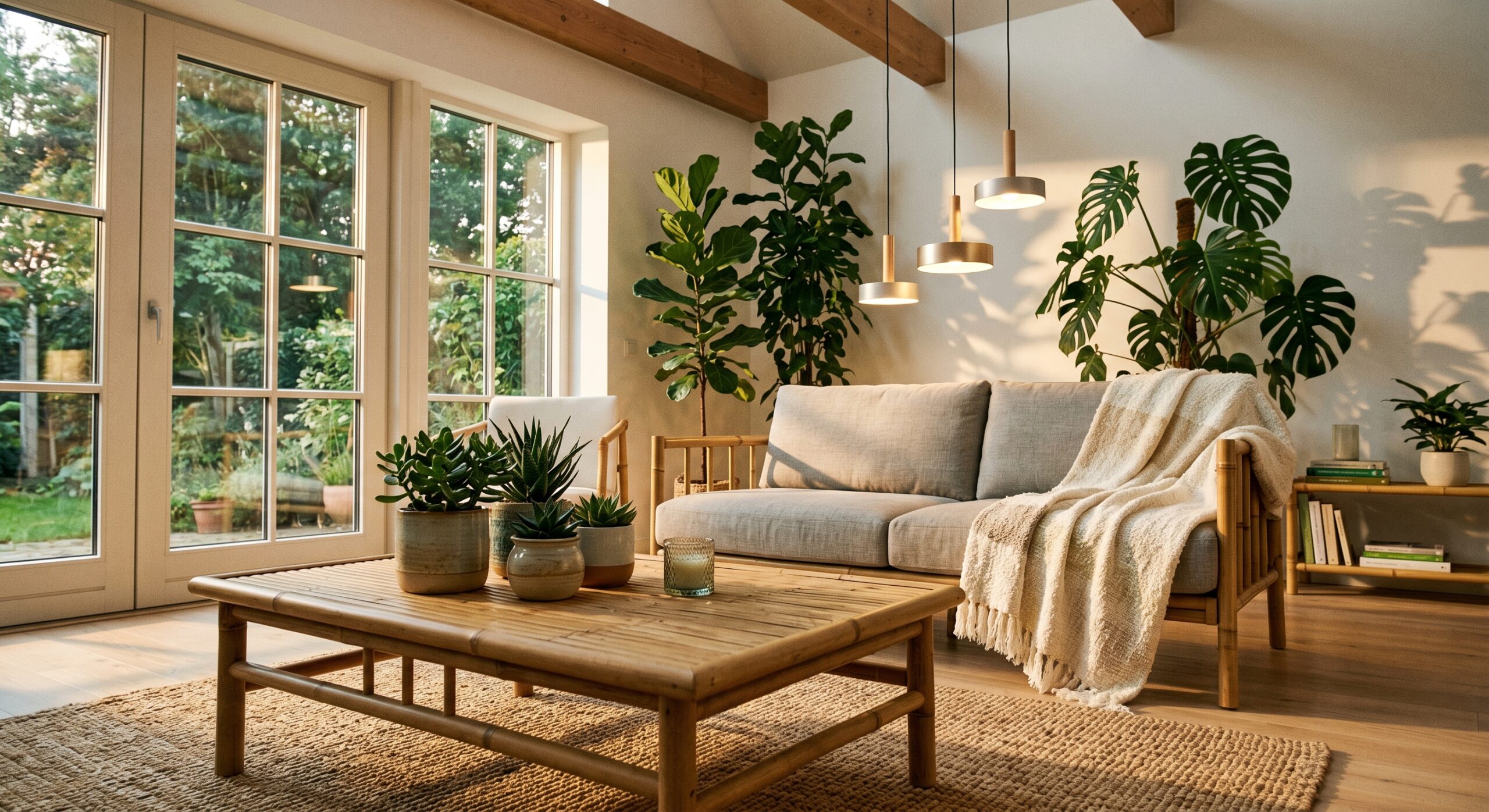
Buildings account for nearly 40% of global energy-related carbon emissions, according to the United Nations Environment Programme. That makes eco-friendly home improvements one of the most effective ways to reduce your environmental impact. Whether you rent a small apartment or own a house, affordable sustainable upgrades can transform your space into a healthier, more stylish home.
At the eco aesthetic, we focus on green living that works with modern design. This guide covers practical eco-friendly home improvements, from non-toxic paint to energy-efficient lighting that keeps style intact. You’ll learn how small changes like switching to LED bulbs or adding indoor plants can lower your home’s carbon footprint and improve your well-being. By the end, you’ll have a clear plan for creating a sustainable space that reflects your values without sacrificing comfort or design.
At a Glance
- Sustainable upgrades can reduce carbon emissions and utility bills — some homes save up to 30% on energy costs with smart improvements.
- Affordable options are available for every budget, from DIY projects to mid-range renovations.
- Non-toxic materials improve indoor air quality, which is especially important in small or poorly ventilated spaces.
- Style and sustainability can coexist — modern eco-friendly designs are sleek, functional, and attractive.
Why Choose Sustainable Home Upgrades?
Energy-efficient homes use up to 50% less energy than conventional ones, according to the International Energy Agency. That means lower utility bills, fewer carbon emissions, and often higher resale value. For renters, these upgrades often require no permanent changes, making them ideal for temporary spaces.
Eco-friendly renovations also prioritize materials that reduce indoor air pollution, a major health concern in modern, airtight homes. The U.S. Environmental Protection Agency reports that indoor air can be two to five times more polluted than outdoor air, often because of volatile organic compounds in conventional paints, adhesives, and furnishings. Choosing low-VOC or zero-VOC products helps both the planet and your family’s health.
Sustainable design also emphasizes durability and repairability. For example, bamboo flooring — harvested from rapidly renewable sources — can last decades and be recycled at the end of its life, unlike many synthetic alternatives. Investing in high-quality, eco-conscious materials reduces long-term costs and environmental impact.
Economic Benefits of Eco-Friendly Upgrades
Energy-efficient homes save homeowners an average of $200 to $400 per year on utility bills, according to the American Council for an Energy-Efficient Economy. Over a home’s lifespan, these savings can total thousands of dollars.
Many governments and utilities offer rebates or tax credits for energy-efficient upgrades, such as solar panels, insulation, or ENERGY STAR® certified appliances. The U.S. federal government’s ENERGY STAR program provides tax credits for qualifying improvements, while local programs may offer additional incentives. Always check your region’s policies to maximize savings.
For renters, sustainable upgrades can be temporary and reversible. Removable wallpaper, peel-and-stick tiles, and modular furniture let you personalize your space without violating lease agreements or causing permanent damage. These options bring eco-conscious living without sacrificing flexibility.
Top Sustainable Home Upgrades for Every Space
Ready to turn your home into a sustainable sanctuary? Below is a list of eco-friendly design ideas for different spaces and budgets. These upgrades balance aesthetics with environmental responsibility.
1. Energy-Efficient Lighting That Looks Good
Lighting makes up about 15% of the average home’s electricity use, according to the IEA. Switching to energy-efficient lighting is one of the easiest ways to cut energy use and costs. LED bulbs use up to 85% less energy than incandescent bulbs and last 25 times longer.
Modern LED bulbs come in various color temperatures — from warm 2700K for cozy living rooms to cool 5000K for kitchens — and are available in dimmable and smart versions. Smart lighting systems like Philips Hue or Lutron let you control brightness and color via smartphone. Automated scheduling and motion sensors can reduce energy waste by up to 80%.
For a stylish approach, consider statement fixtures made from sustainable materials. Pendant lights crafted from reclaimed wood, recycled glass, or bamboo add warmth and texture. Brands like Terratek and Ambiente specialize in lighting that blends form and function. Whether you’re renovating a kitchen, bedroom, or home office, energy-efficient lighting sets the tone for your space.
For more ideas, see our guide: The Complete Guide To Energy Efficient Lighting That Actually Looks Beautiful.
2. Non-Toxic Paint and Finishes for Healthier Homes
Conventional paints often contain harmful VOCs that off-gas for years, polluting indoor air. Symptoms like headaches, dizziness, and respiratory issues can result, especially in tightly sealed, energy-efficient homes. Switching to non-toxic alternatives is a simple but effective upgrade.
Look for paints certified by GREENGUARD Gold or Cradle to Cradle, which set strict standards for low chemical emissions. Brands like AFM Safecoat, EcoPaints, and Benjamin Moore’s Natura offer zero-VOC or low-VOC options in many colors. These paints are as durable and versatile as conventional ones, proving you don’t need to compromise on finish or color.
Beyond paint, consider non-toxic alternatives for wallpaper, adhesives, and wood finishes. Many wallpapers are now made from recycled materials and printed with water-based inks. For wood furniture or flooring, choose finishes with natural oils like linseed or tung oil instead of synthetic varnishes. These choices improve indoor air quality and create a healthier home.
For more details, see our article: Non Toxic Home Upgrades: Healthy Swaps For Paint, Flooring, And Finishes.
3. Sustainable Flooring Options That Last
Flooring is a major design element, but conventional options like vinyl, laminate, and synthetic carpet often contain harmful chemicals and contribute to deforestation. Sustainable alternatives focus on durability, recyclability, and low environmental impact without sacrificing looks.
| Flooring Type | Pros | Cons | Cost (per sq ft) |
|---|---|---|---|
| Bamboo | Rapidly renewable, durable, water-resistant, available in various finishes | Can dent or scratch; some varieties use formaldehyde-based adhesives | $3–$10 |
| Cork | Harvested without harming trees, naturally insulating and sound-absorbing, soft underfoot | Prone to dents; limited color options | $4–$12 |
| Reclaimed Hardwood | Unique character, reduces deforestation, long-lasting | Can be expensive; may require refinishing | $8–$20 |
| Linoleum (Natural) | Made from linseed oil, biodegradable, hypoallergenic, durable | Limited color palette; can be sensitive to moisture | $5–$12 |
| Recycled Rubber | Made from recycled tires, durable, slip-resistant, sound-dampening | Not ideal for formal spaces; limited color options | $3–$8 |
When choosing sustainable flooring, prioritize locally sourced materials to cut transportation emissions. For example, reclaimed hardwood from a nearby salvage yard has a lower footprint than bamboo shipped from overseas. Look for certifications like Forest Stewardship Council (FSC) for wood or Cradle to Cradle for overall sustainability.
Styling Tips for Sustainable Flooring
- Layer with natural rugs made from jute, wool, or recycled fibers to add warmth and texture.
- Choose light or neutral tones to make small spaces feel larger and brighter.
- Mix materials — pair hardwood with cork or bamboo for a dynamic, eclectic look.
4. Eco-Friendly Furniture: How to Shop for Sustainable Pieces
The global furniture market generates over 12 million tons of waste annually, much of which ends up in landfills, according to the UNEP. Good news: sustainable furniture is increasingly accessible, with options from vintage finds to modern designs made from recycled or upcycled materials.
When shopping for eco-friendly furniture, keep these guidelines in mind:
- Materials: Choose solid wood (FSC-certified), reclaimed wood, bamboo, or recycled metal. Avoid particleboard or MDF, which often contain formaldehyde-based adhesives.
- Certifications: Look for labels like GREENGUARD for low chemical emissions, Cradle to Cradle for circular design, or bluesign® for sustainable textile production.
- Durability: Invest in high-quality pieces designed to last. Modular or multi-functional furniture reduces future replacements, lowering environmental impact.
- Local craftsmanship: Buying locally reduces transport emissions and supports fair labor practices.
- Secondhand and vintage: Thrifting or buying from platforms like eBay, Etsy, or local consignment shops extends furniture life and prevents waste.
Brands leading in sustainable furniture include EcoSalon, Avocado Green Furniture, and Medley Home. These companies focus on transparency, ethical sourcing, and non-toxic materials, proving style and sustainability work together.
Affordable Alternatives
- Upcycle existing pieces: Paint, reupholster, or repurpose old furniture with eco-friendly materials.
- DIY with reclaimed wood: Build shelves, tables, or headboards using pallets or salvaged lumber.
- Rent or lease furniture: Services like Furniture Choice (UK) or Fernish (U.S.) offer sustainable rental options for apartments or temporary spaces.
5. Water Conservation Upgrades for a Greener Home
Water conservation is a key but often overlooked part of sustainable living. The average U.S. household uses over 300 gallons of water per day, according to the EPA. Simple upgrades like low-flow fixtures, smart irrigation, and greywater recycling can cut water use without sacrificing performance.
Effective water-saving upgrades include:
- Low-flow showerheads and faucets: Modern models use as little as 1.5 gallons per minute, compared to 2.5 gpm for standard fixtures. Brands like Weeco Smart and Hydro Flask offer stylish, high-efficiency options.
- Dual-flush toilets: These let you choose between a full flush for solids and a half flush for liquids, cutting water use by up to 68%. The Toiletology website provides a guide to selecting the best models.
- Smart irrigation systems: For homes with gardens or lawns, smart controllers like Rachio use weather data to optimize watering schedules, reducing waste by up to 50%.
- Greywater systems: Greywater from sinks, showers, and washing machines can be reused for irrigation or toilet flushing. Systems like Aquacell make greywater recycling easier.
- Rainwater harvesting: Collecting rainwater in barrels or tanks provides a free water source for gardening or cleaning. The RainHarvest Systems website offers solutions for different climates.
For renters, portable low-flow showerheads and faucet aerators are easy to install and can cut water use by up to 40%. These small changes add up quickly, lowering bills and environmental impact.
6. Smart Home Technology for Energy and Water Efficiency
Smart home tech isn’t just convenient — it’s a powerful tool for cutting carbon footprints. Devices like smart thermostats, energy monitors, and automated lighting learn your habits and optimize usage, often without manual adjustments.
Impactful smart home upgrades include:
- Smart thermostats: Devices like Nest or Ecobee can save up to 20% on heating and cooling by learning your schedule. They also integrate with renewable energy sources like solar panels to maximize efficiency.
- Energy monitors: Products like Sense or Emporia Energy track real-time energy use, helping you spot wasteful appliances and habits. Some even offer AI-powered tips for reducing consumption.
- Smart plugs and switches: These let you control outlets and lighting remotely, cutting standby power use. Brands like TP-Link Kasa and Wemo offer affordable options for renters and owners.
- Automated irrigation systems: Smart controllers like Rachio use weather data to optimize watering, reducing waste by up to 50%.
- Solar-powered chargers and devices: For renters or those unable to install solar panels, portable solar chargers like Renogy offer a sustainable way to power small electronics.
While smart tech requires an upfront investment, long-term utility savings and reduced environmental impact make it worthwhile. Many devices are user-friendly, with intuitive apps and voice control via Amazon Alexa or Google Assistant.
7. Indoor Plants and Biophilic Design for Healthier Spaces
Indoor plants do more than decorate — they improve air quality, reduce stress, and boost well-being. Biophilic design, which integrates natural elements into indoor spaces, has been shown to enhance productivity, creativity, and happiness. A study in ScienceDirect found that indoor plants can remove up to 87% of air toxins in 24 hours.
Top air-purifying plants for your home:
| Plant | Benefits | Care Level | Best For |
|---|---|---|---|
| Snake Plant (Sansevieria) | Removes formaldehyde, benzene, and xylene; releases oxygen at night | Low | Bedrooms, offices, low-light spaces |
| Spider Plant (Chlorophytum comosum) | Removes carbon monoxide and formaldehyde; pet-friendly | Low | Kitchens, bathrooms, hanging baskets |
| Peace Lily (Spathiphyllum) | Removes ammonia, benzene, and formaldehyde; blooms white flowers | Medium | Bathrooms, living rooms, offices |
| Boston Fern (Nephrolepis exaltata) | Removes formaldehyde and xylene; increases humidity | Medium | Living rooms, kitchens, humid spaces |
| Aloe Vera | Removes formaldehyde and benzene; soothing gel for skin | Low | Kitchens, sunny windowsills |
Beyond plants, biophilic design includes natural materials like wood, stone, and rattan in furniture and decor. Large windows that maximize natural light, organic shapes in furnishings, and earthy color palettes create calming, restorative environments. Brands like Anthropologie and Urban Outfitters feature biophilic elements in home decor, making stylish options easy to find.
8. Zero-Waste Kitchen Design: Stylish and Functional
The kitchen is often the heart of the home, but it’s also a major source of household waste. Zero-waste kitchen design reduces trash through mindful material choices, efficient storage, and reusable alternatives — all while keeping a sleek, modern look.
Key strategies for a zero-waste kitchen:
- Storage solutions: Swap plastic containers for glass jars, stainless steel tins, or silicone lids. Brands like Life Without Plastic offer zero-waste storage. Use stackable, modular containers to save space and cut clutter.
- Composting: Even in small apartments, composting is possible. Countertop bins like Bokashi Organko or electric composters like Lomi make it easy to turn food scraps into nutrient-rich soil. Check if your city offers curbside compost pickup (e.g., San Francisco or Seattle).
- Reusable alternatives: Replace paper towels with Swedish dishcloths, single-use sponges with natural loofahs, and plastic wrap with beeswax wraps. These swaps cut waste and often last longer than disposable versions.
- Water filtration: Install a faucet-mounted or pitcher-based water filter to reduce reliance on single-use plastic bottles. Systems like Aquasana or Brita are affordable and effective.
- Efficient appliances: Look for ENERGY STAR® certified appliances that use less water and energy. For example, an ENERGY STAR® dishwasher uses about 3.5 gallons per cycle compared to 6 gallons for a standard model.
For inspiration, see our guide: Zero Waste Kitchen Design: Stylish Solutions For A Greener Home.
9. Affordable Sustainable Upgrades for Renters
Renters can make a big environmental impact with reversible, non-permanent upgrades. Focus on changes that don’t damage walls or floors while reducing your footprint.
Accessible sustainable upgrades for renters include:
- Peel-and-stick tiles: Swap old flooring with removable tiles made from recycled materials. Brands like Modsquad offer eco-friendly, adhesive-free options that install in minutes.
- Removable wallpaper: Update walls with peel-and-stick wallpaper made from sustainable materials like grass cloth or recycled paper. Companies like Wallpaper from the 70s specialize in vintage-inspired, eco-conscious designs.
- DIY insulation: Use thermal curtains, draft stoppers, or window film to improve energy efficiency without damaging walls. Thermal curtains can reduce heat loss by up to 25%, while window film offers an affordable alternative to double-pane windows.
- Plants and greenery: Add life to your space with low-maintenance indoor plants or vertical gardens. Hanging planters, wall-mounted pots, and self-watering systems like Lechuza make it easy to bring nature indoors.
- Energy-efficient appliances: If you need new appliances, choose ENERGY STAR® models or secondhand finds in good condition. Even small upgrades like LED bulbs or reusable water bottles make a difference.
For renters, sustainable upgrades balance impact with flexibility. Focus on reversible changes and low-cost, high-impact swaps. Every small step, like using cloth shopping bags or switching to reusable containers, helps.
How to Choose the Right Sustainable Upgrades for Your Home
With many eco-friendly home improvements available, it can be hard to know where to start. Prioritize upgrades based on your home’s specific needs, budget, and long-term goals. Here’s a step-by-step guide:
Step 1: Assess Your Home’s Energy and Water Use
Before making upgrades, conduct a simple energy and water audit to spot inefficiencies. The U.S. Department of Energy provides a DIY guide. Key areas to check:
- Insulation: Look for drafts around windows, doors, and attic hatches. Poor insulation can account for up to 30% of energy loss, according to BuildingGreen.
- Appliances: Identify energy-guzzling appliances like old refrigerators or space heaters. Upgrading to ENERGY STAR® models can save hundreds per year.
- Water fixtures: Check faucets, showerheads, and toilets for leaks or inefficient flow. A leaky faucet can waste up to 3,000 gallons per year, per the EPA.
- Lighting: Determine which areas use the most lighting energy. Switching to LEDs in high-use areas like kitchens or living rooms can yield big savings.
Once you’ve found the biggest areas of waste, prioritize upgrades with the fastest payback. Sealing air leaks and adding insulation often provide savings within a year.
Step 2: Set a Budget and Timeline
Sustainable upgrades range from under $50 (LED bulbs) to thousands (solar panels or new windows). Setting a budget and timeline keeps you on track and prevents overspending. Consider:
- Short-term (0–6 months): Focus on low-cost, high-impact upgrades like LED lighting, weatherstripping, or low-flow fixtures.
- Medium-term (6–18 months): Invest in mid-range upgrades like non-toxic paint, sustainable flooring, or energy-efficient appliances.
- Long-term (18+ months): Plan for larger projects like solar panels, insulation upgrades, or smart home systems.
If budget is tight, break upgrades into phases or prioritize renter-friendly changes that can be reversed when you move.
Step 3: Research Materials and Brands
Not all “eco-friendly” products are truly sustainable. Some use vague terms without clear evidence. To make responsible choices, research materials and brands thoroughly. Look for:
- Certifications: Prioritize products with third-party certifications like GREENGUARD (low chemical emissions), FSC (sustainably sourced wood), or Cradle to Cradle (circular design).
- Transparency: Choose brands that disclose supply chains, material sourcing, and manufacturing processes. Companies like Patagonia and Avocado Green Furniture are known for transparency.
- Durability: Opt for high-quality materials designed to last. Durable products reduce long-term waste and replacement costs.
- Local sourcing: Whenever possible, choose locally made or sourced products to cut transport emissions.
For recommendations, see our lists of eco-friendly home decor, green interior design, and environmentally conscious living.
Step 4: Hire Ethical and Experienced Contractors
For renovations or structural changes, hiring an ethical, experienced contractor is key. Look for professionals who specialize in sustainable design or have a track record of eco-friendly projects. How to find the right fit:
- Ask for referrals: Word-of-mouth recommendations from friends, family, or local sustainability groups can help you find trustworthy contractors.
- Check certifications: Look for contractors certified by organizations like the U.S. Green Building Council or Passive House Institute.
- Review portfolios: Ask potential contractors for examples of past sustainable projects. Do their designs match your aesthetic and values?
- Request quotes: Get at least three quotes to compare pricing and services. Ensure quotes include details about material sourcing and waste reduction practices.
For smaller projects, consider hiring a handyman or DIY-ing with guidance from online tutorials. Websites like This Old House or Family Handyman offer step-by-step instructions for many home improvements.
Common Mistakes to Avoid When Upgrading Sustainably
1. Greenwashing: Don’t Fall for Marketing Gimmicks
Greenwashing uses misleading claims to make products seem more eco-friendly than they are. Terms like “eco-friendly” or “natural” often lack evidence or certifications. For example, a “biodegradable” plastic bag may only break down in industrial facilities, not at home, making it misleading for most users.
To avoid greenwashing, always look for third-party certifications and transparent sourcing information. Reputable certifications include:
- GREENGUARD Gold: Ensures low chemical emissions for healthier indoor air.
- Cradle to Cradle: Certifies products for circular design and sustainability.
- Fair Trade Certified: Ensures ethical labor practices and sustainable sourcing.
- FSC: Certifies sustainably sourced wood and paper products.
- Energy Star: Certifies energy-efficient appliances and electronics.
If a product’s sustainability claims seem too good to be true, verify its certifications and reviews.
2. Overlooking Lifespan and Durability
Sustainability isn’t just about materials — it’s about how long a product lasts. Cheap, low-quality items that need frequent replacement can be less sustainable than investing in durable alternatives. For example, a $20 plastic shower curtain may seem cheap, but it needs replacing every few years and contributes to landfill waste. A $50 organic cotton curtain can last a decade and biodegrades at the end of its life.
When evaluating sustainable upgrades, ask:
- How long will this product last?
- Can it be repaired or recycled at the end of its life?
- Is it made from renewable or recycled materials?
Prioritizing durability ensures your upgrades have lasting positive impact.
3. Ignoring Transportation and Embodied Carbon
A product’s sustainability can be negated by transport emissions. For example, bamboo shipped from Asia has a higher footprint than locally made wood, even if bamboo is renewable. Embodied carbon — the total emissions from a product’s lifecycle — matters too.
To minimize transport emissions:
- Buy local: Support regional businesses and artisans to cut shipping distances.
- Choose recycled materials: Products made from recycled materials often have lower embodied carbon than those from virgin sources.
- Opt for multi-functional items: Fewer items mean less transport. A modular sofa that converts to a bed reduces the need for multiple pieces.
For more on embodied carbon, see the Architecture 2030 initiative.
4. Forgetting About Indoor Air Quality
Many “eco-friendly” products still off-gas harmful chemicals. For example, some “natural” cleaning products contain essential oils that irritate asthma or allergies, while “green” carpets may have stain-resistant chemicals that release toxins over time.
To ensure upgrades improve indoor air quality:
- Choose low-VOC or zero-VOC paints and finishes: Look for GREENGUARD or similar certifications.
- Avoid synthetic fragrances: Many candles and air fresheners contain phthalates or other harmful chemicals. Opt for unscented or naturally scented alternatives.
- Ventilate your home: Even with non-toxic materials, proper ventilation is key. Use exhaust fans in kitchens and bathrooms, and open windows regularly.
- Test your air quality: Consider an air quality monitor like Awair or Foobot to track pollutants.
For more tips, see our article on Non Toxic Home Upgrades: Healthy Swaps For Paint, Flooring, And Finishes.
Frequently Asked Questions About Sustainable Home Upgrades
Are sustainable home upgrades really worth the cost?
Yes — while some upgrades require an upfront investment, they often pay for themselves through savings on utilities, maintenance, and healthcare. Switching to LED lighting can save up to $100 per year in energy costs, and non-toxic paint reduces indoor air pollution, improving respiratory health and lowering medical bills. Many governments and utilities also offer rebates or tax credits for energy-efficient upgrades, further reducing costs.
According to the ACEEE, energy-efficient homes save homeowners an average of $200 to $400 per year on utility bills. Over a home’s lifespan, these savings can total thousands of dollars. Even small upgrades like low-flow showerheads or smart thermostats can yield big long-term benefits.
Can I make sustainable upgrades in a rental apartment?
Yes. Renters can make a meaningful impact with reversible, non-permanent changes. Focus on upgrades that don’t damage walls or floors, such as:
- Switching to LED bulbs and energy-efficient appliances.
- Adding thermal curtains or window film to improve insulation.
- Using peel-and-stick wallpaper or removable tiles for a fresh look.
- Incorporating indoor plants and biophilic design elements.
- Choosing reusable alternatives like cloth shopping bags and glass food storage.
Many landlords are open to sustainable upgrades if they’re temporary. Always check your lease and get approval before making changes.
What’s the most sustainable flooring option?
The most sustainable flooring depends on budget, lifestyle, and style, but these materials generally rank highest:
- Reclaimed hardwood: Gives new life to existing wood, reducing deforestation and landfill waste. Choose FSC-certified or locally sourced options.
- Bamboo: A rapidly renewable resource that’s durable and water-resistant. Pick products made with formaldehyde-free adhesives to avoid off-gassing.
- Cork: Harvested without harming trees, naturally insulating and sound-absorbing. Best for low-traffic areas due to denting.
- Linoleum (natural): Made from linseed oil, cork dust, and wood flour, it’s biodegradable and hypoallergenic. Ideal for kitchens and bathrooms.
Avoid vinyl, laminate, and synthetic carpet, which often contain PVC, formaldehyde, or other harmful chemicals. If on a tight budget, consider affordable options like jute rugs or recycled rubber flooring for smaller spaces.
How do I know if a product is truly sustainable?
Look for third-party certifications and transparent sourcing information. Reputable certifications include:
- GREENGUARD Gold: Ensures low chemical emissions for healthier indoor air.
- Cradle to Cradle: Certifies products for circular design and sustainability.
- Fair Trade Certified: Ensures ethical labor practices and sustainable sourcing.
- FSC: Certifies sustainably sourced wood and paper products.
- Energy Star: Certifies energy-efficient appliances and electronics.
- Bluesign®: Certifies sustainable textile production.
Research the brand’s supply chain and manufacturing practices. Companies that prioritize transparency, local sourcing, and ethical labor are more likely to offer truly sustainable products. Be wary of vague terms like “eco-friendly” or “natural” without supporting evidence.
What’s the easiest sustainable upgrade to start with?
The easiest and most affordable sustainable upgrade is switching to LED lighting. LED bulbs use up to 85% less energy than incandescent bulbs and last 25 times longer. They’re widely available, cost as little as $5 per bulb, and come in various color temperatures. Other low-effort upgrades include:
- Installing low-flow showerheads and faucet aerators: These can cut water use by up to 50% and are easy to install.
- Using reusable bags and containers: Swap plastic bags for cloth totes and single-use containers for glass jars or silicone lids.
- Adding indoor plants: Snake plants, spider plants, and peace lilies improve air quality and add life to your space.
- Sealing air leaks: Use weatherstripping or caulk to seal gaps around windows, doors, and outlets. This can cut energy waste by up to 30%.
These small changes require minimal effort but make a meaningful difference in your home’s sustainability and utility bills.
Do sustainable upgrades increase my home’s resale value?
Yes. Homes with energy-efficient features and sustainable materials tend to sell faster and for higher prices. According to a report by Zillow, homes with solar panels sell for 4.1% more than comparable homes without them. A study by the USGBC found that LEED-certified homes have higher resale values and lower vacancy rates.
Sustainable upgrades also appeal to buyers who prioritize eco-conscious living. Features like energy-efficient appliances, non-toxic materials, and water-saving fixtures make your home more attractive. Even small upgrades like LED lighting or smart thermostats can enhance marketability.
Conclusion: Your Path to a Sustainable and Stylish Home
Sustainable home upgrades are a practical way to reduce your environmental footprint, improve your health, and create a space that reflects your values. Whether renovating a house, upgrading a rental, or making small changes, eco-friendly design ideas exist for every budget and lifestyle.
At the eco aesthetic, we focus on sustainability that works with modern design. By choosing non-toxic materials, energy efficiency, and circular design, you can create a home that’s both beautiful and responsible. Start with small, high-impact upgrades like LED lighting or low-flow fixtures, then gradually add larger projects like sustainable flooring or smart home systems. Every change, no matter how small, contributes to a greener future.
Ready to begin? Explore our curated guides on eco-friendly home decor, green interior design, and environmentally conscious living for more ideas. For stylish, functional kitchen solutions, see our guide to Zero Waste Kitchen Design: Stylish Solutions For A Greener Home.
Sustainability is about progress, not perfection. By making mindful choices and embracing eco-friendly design, you’re taking a meaningful step toward a healthier home and planet.